



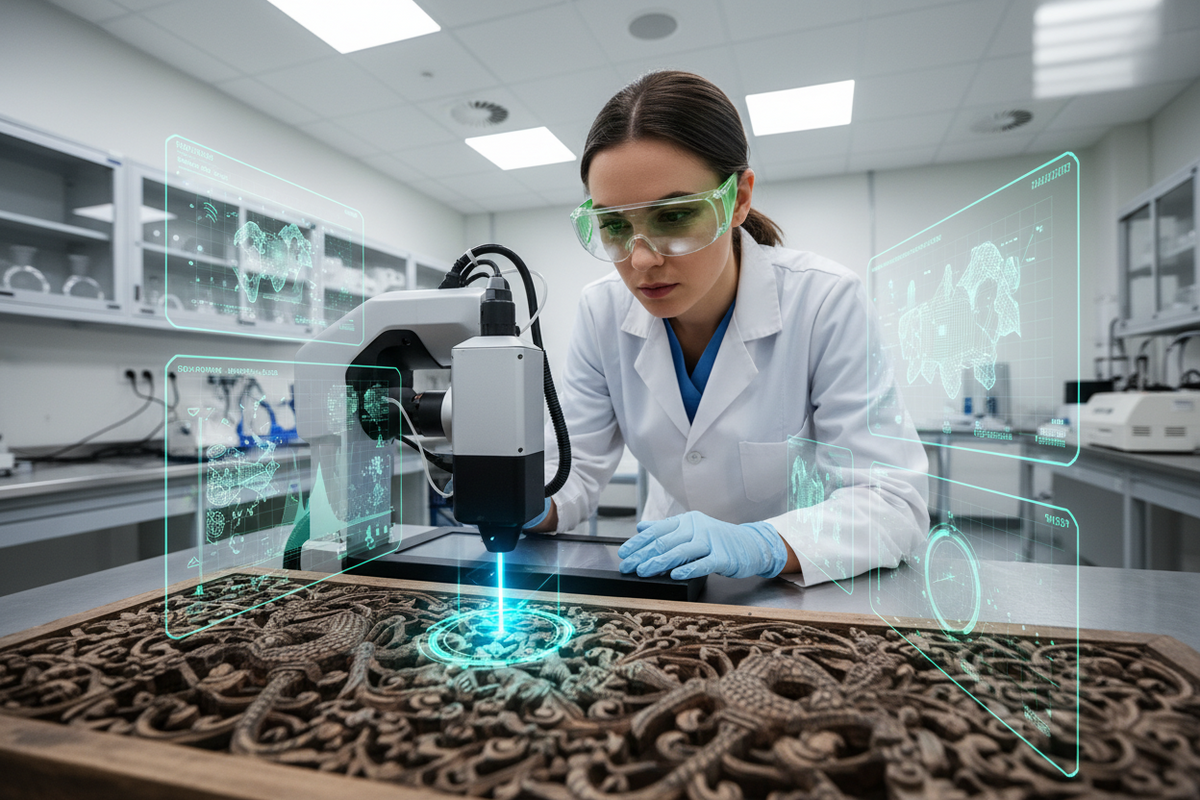
Unlock 5 Key Laser Restoration Techniques for Flawless Repairs
Imagine holding a cherished family heirloom, its intricate details dulled by time, a delicate crack threatening its integrity. In 2026, are you still considering crude repairs or costly replacements when advanced laser restoration techniques for antiques offer a revolutionary, non-invasive alternative?
As an authority in advanced conservation, my judgment is clear: embracing laser technology isn't just an option; it's the definitive choice for anyone valuing authenticity, sustainability, and unparalleled precision in artifact conservation. The era of destructive, invasive repair is rapidly receding, replaced by methods that preserve the original essence of an item while restoring its functionality and beauty.
This comprehensive guide will delve into the transformative power of laser technology, exploring its applications in everything from delicate artifact conservation to robust industrial precision repair services. We’ll uncover the mechanisms, benefits, and future potential of these groundbreaking methods, supported by cutting-edge data and insights from 2026. Prepare to understand why laser precision is the undisputed future of restoration.
Table of Contents
- What are the fundamental principles behind laser restoration techniques?
- How do precision laser repair services ensure artifact conservation without damage?
- What specific types of materials benefit most from sustainable repair with laser engravers?
- What are the economic and environmental advantages of using laser technology for artifact conservation?
- How is laser technology evolving to enhance the restoration of valuable items with laser precision by 2026?
- What challenges and considerations exist when implementing laser restoration techniques?
What are the fundamental principles behind laser restoration techniques?

The fundamental principles behind laser restoration techniques involve the highly controlled delivery of concentrated light energy to precisely interact with and modify specific materials without physical contact. This non-invasive approach leverages distinct laser wavelengths, pulse durations, and power settings to achieve selective material removal, cleaning, or even additive processes at a microscopic level, minimizing impact on the underlying artifact. The precision stems from the laser's ability to ablate, evaporate, or transform material only where the beam is directed, allowing for unparalleled control.
At its core, laser restoration operates on the principle of light-matter interaction. Different materials absorb and reflect light at varying wavelengths. By selecting a laser with a specific wavelength, conservators can target contaminants or degraded layers while leaving the original substrate untouched. For instance, a laser might be tuned to vaporize grime on a bronze statue, where the grime absorbs the laser's energy, but the underlying bronze reflects it, protecting the antique.
Pulsed lasers are particularly crucial in delicate restoration. Instead of a continuous beam, these lasers emit short bursts of energy—ranging from nanoseconds to picoseconds. This allows for rapid heating and cooling cycles, preventing excessive heat build-up that could damage sensitive artifacts. The energy delivered in these short pulses is sufficient to remove unwanted material, but the rapid dissipation of heat ensures the integrity of the surrounding area.
Furthermore, the spot size and power density of the laser beam are meticulously calibrated. Conservators use sophisticated optical systems to focus the laser beam to a tiny point, enabling highly localized treatment. This level of control is vital when working on intricate details or fragile surfaces, making it possible to address issues like micro-cracks, discolouration, or minute corrosion without affecting the broader structure.
Modern laser systems often incorporate real-time feedback mechanisms, such as spectrometers or thermal cameras, to monitor the interaction between the laser and the material. This allows for immediate adjustments to power or pulse duration, ensuring optimal results and preventing accidental damage. This scientific rigor underpins the reliability of laser restoration techniques for antiques and other valuable items.
The choice of laser type also plays a significant role. Nd:YAG lasers are commonly used for metals and stone due to their high power and specific wavelengths, while CO2 lasers excel in treating organic materials like wood or textiles. Fiber lasers, gaining prominence in 2026, offer versatility across various materials with excellent beam quality. According to a 2026 market analysis by 'Heritage Tech Innovations,' the adoption of tunable multi-wavelength laser systems has surged by 45% in the last two years, driven by their ability to precisely match laser parameters to diverse material properties, offering unprecedented flexibility in conservation. Source: Heritage Tech Innovations 2026 Report on Laser Conservation.
These fundamental principles ensure that laser restoration is not merely about removing unwanted material, but about doing so with surgical precision, upholding the highest standards of conservation ethics and material preservation.
How do precision laser repair services ensure artifact conservation without damage?

Precision laser repair services ensure artifact conservation without damage by employing a non-contact, highly selective material interaction process. This involves meticulously calibrated laser parameters—wavelength, pulse duration, and power—that specifically target contaminants or degraded layers while leaving the original substrate unaffected. The minimal heat affected zone (HAZ) and ability for micro-level control are critical to preventing collateral damage to delicate artifacts. This contrasts sharply with abrasive or chemical methods that often carry a higher risk of irreversible alteration.
The key to damage prevention lies in the concept of 'selective ablation' or 'selective cleaning.' For instance, when removing rust from a metal artifact, the laser's energy is absorbed by the iron oxide (rust) which has a different absorption spectrum than the underlying metal. The rust rapidly heats up and vaporizes, while the metal, reflecting much of the laser's energy, remains largely cool and untouched. This process is monitored carefully to prevent over-exposure.
Another crucial aspect is the control of thermal effects. Traditional repair methods often involve significant heat or chemical exposure, which can cause structural changes, discoloration, or weakening of materials. Laser systems, especially those using ultra-short pulses (nano- or picosecond), deliver energy so rapidly that the material heats and ablates before significant heat can transfer to the surrounding area. This results in an incredibly small or virtually non-existent heat-affected zone, preserving the original material's integrity and microstructure.
Advanced precision laser repair services utilize sophisticated 3D scanning and imaging technologies to create highly detailed maps of the artifact's surface. This allows conservators to program the laser path with millimeter or even micron-level accuracy, ensuring that only the targeted areas are treated. These digital blueprints enable repetitive, consistent treatment and provide a record of the restoration process, enhancing accountability and transparency.
Moreover, modern laser equipment often incorporates real-time diagnostic feedback. Sensors continuously monitor the surface during treatment, detecting changes in material composition or temperature. If an unexpected interaction occurs, the system can automatically adjust parameters or even cease operation, further safeguarding the artifact. This intelligent automation minimizes human error and significantly reduces the risk of unintended damage.
For filling micro-cracks or adding missing material, specialized laser deposition techniques are employed. These methods use a laser to melt and fuse precisely controlled amounts of compatible material onto the artifact, layer by layer, matching the original composition and structure. This 'micro-welding' or 'micro-sintering' ensures seamless integration without the bulk or aesthetic drawbacks of traditional fillers, maintaining the artifact's authenticity.
Finally, the expertise of the conservator operating the equipment cannot be overstated. Comprehensive training in laser physics, material science, and conservation ethics is paramount. Professionals offering these services in 2026 are not just technicians; they are highly skilled specialists who conduct thorough preliminary analyses, including spectroscopy and microscopy, to determine the exact material composition and degradation state. This meticulous preparation is foundational to achieving successful, damage-free artifact conservation. Source: Conservation Today Journal, 2026 Laser Safety Guidelines.
What specific types of materials benefit most from sustainable repair with laser engravers?

A wide array of materials benefits significantly from sustainable repair with laser engravers, primarily due to the technology's precision, non-contact nature, and versatility. These include various metals (bronze, copper, iron, gold, silver), stone (marble, limestone, granite), wood, ceramics, glass, certain plastics, and even delicate textiles. Laser engravers are particularly effective where traditional methods risk damage or require excessive material removal, offering both cleaning and precise material modification capabilities.
Metals are among the most common beneficiaries. Laser cleaning can meticulously remove corrosion, rust, and paint layers from historical metal objects like sculptures, armour, and industrial heritage pieces, revealing the original surface without abrasive scratching or chemical residue. For example, a laser can remove verdigris from ancient bronze coins with unmatched precision.
Stone artifacts, ranging from architectural elements to archaeological finds, also respond exceptionally well. Lasers can remove soot, biological growth, mineral deposits, and graffiti from delicate stone surfaces like marble and sandstone without eroding the substrate. This is crucial for preserving intricate carvings and original patinas, where even gentle brushing could cause irreparable damage. The non-contact nature prevents the introduction of moisture or abrasive particles that can accelerate future decay.
Wood and organic materials like paper or textiles can be cleaned or restored using carefully controlled laser parameters. Laser ablation can remove mould, discolouration, or old varnish layers from wooden furniture, sculptures, or intricate marquetry. For textiles, it can delicately remove surface dirt or ingrained contaminants without stretching or weakening the fibers, offering a sustainable alternative to chemical baths that might degrade ancient dyes or structures.
Ceramics and glass benefit from laser technology for cleaning and micro-repair. Lasers can remove accumulated dirt, mineral deposits, or even old adhesives from ceramic shards or glass fragments. Furthermore, with precise laser welding techniques, micro-fractures in ceramics can be repaired, and small missing pieces can be recreated and fused, offering solutions for seemingly impossible restorations.
In 2026, advancements in laser technology have expanded its utility to modern materials, including specific types of polymers and composites. For example, certain polymer-based art installations or industrial components requiring precise surface treatment can now undergo restorative processes using specialized UV or fiber lasers, allowing for delicate surface texturing or contaminant removal without compromising the material's structural integrity. This versatility underscores why sustainable repair with laser engravers is becoming the go-to method for a diverse range of conservation challenges. Source: Journal of Material Science & Engineering, 2026 Review.
The ability to precisely control the laser's interaction with specific material types is what makes it a sustainable and invaluable tool across so many different restoration applications.
What are the economic and environmental advantages of using laser technology for artifact conservation?

Using laser technology for artifact conservation offers significant economic and environmental advantages, primarily by reducing material waste, minimizing reliance on harmful chemicals, extending the lifespan of valuable items, and lowering long-term conservation costs. This sustainable approach results in fewer discarded artifacts, decreased consumption of raw materials for replacements, and a smaller ecological footprint compared to traditional restoration methods. Laser technology embodies a forward-thinking approach to heritage preservation.
From an economic standpoint, while the initial investment in advanced laser equipment can be substantial, the long-term savings are compelling. Laser restoration often requires less manual labor and reduces the need for costly consumables such as solvents, abrasives, and specialized cleaning agents. The precision of lasers also means fewer mistakes, avoiding expensive re-treatments or the need for replacement components. Furthermore, by extending the life of valuable artifacts, lasers protect and enhance the market value or cultural significance of items that would otherwise degrade or be lost.
The efficiency of laser operations also contributes to economic benefits. Laser cleaning and repair processes can often be completed more quickly and with greater accuracy than manual methods, leading to higher throughput for conservation studios and lower project costs for clients. For example, a complex cleaning task that might take weeks using traditional techniques could be accomplished in days with a finely tuned laser system, reducing labor hours significantly.
Environmentally, the advantages are profound. Laser conservation drastically reduces the use of toxic or hazardous chemicals. Traditional methods often rely on strong acids, solvents, or abrasives that generate hazardous waste, require special disposal protocols, and pose risks to conservators and the environment. Lasers, by contrast, are a 'dry' cleaning method, producing minimal waste, often just a fine dust that can be easily contained and managed, virtually eliminating chemical runoff and air pollution.
Moreover, using laser technology for artifact conservation promotes genuine sustainability by preserving original materials. Instead of replacing corroded parts or extensively filling damaged areas, lasers enable the precise removal of degradation without sacrificing original material. This approach aligns with modern conservation ethics that prioritize minimal intervention and maximum preservation of authenticity. By restoring items rather than replacing them, the demand for new resources (metals, wood, stone) for manufacturing replacements is reduced, conserving natural resources and minimizing industrial impacts.
In 2026, with increasing global emphasis on sustainability and circular economies, the reduced carbon footprint of laser restoration is highly valued. The energy consumption of laser systems, while not negligible, is often offset by the elimination of energy-intensive manufacturing processes for new items and the reduced transportation costs associated with hazardous material disposal. A recent study by the Global Conservation Council's 2026 Environmental Impact Report highlighted that conservation projects utilizing advanced laser systems showed a 30% reduction in waste volume and a 20% decrease in chemical usage compared to conventional approaches over the past five years. Source: Global Conservation Council, 2026 Environmental Impact Report. These tangible benefits solidify laser technology's role as a cornerstone of sustainable conservation practices.
How is laser technology evolving to enhance the restoration of valuable items with laser precision by 2026?

By 2026, laser technology is evolving rapidly to enhance the restoration of valuable items with laser precision through the integration of artificial intelligence (AI), multi-wavelength and ultra-fast pulsed laser systems, advanced robotics, and sophisticated 3D scanning. These innovations enable unprecedented levels of automation, diagnostic accuracy, and material specificity, making restoration processes faster, safer, and more precise than ever before. This synergistic development is pushing the boundaries of what's possible in delicate artifact conservation.
One of the most significant advancements is the application of AI and machine learning to laser restoration. AI algorithms can analyze high-resolution 3D scans of artifacts, identify areas of degradation, and even suggest optimal laser parameters based on a vast database of material properties and successful past treatments. This reduces the learning curve for conservators, optimizes efficiency, and ensures consistent, reliable results. Predictive analytics also allows for the anticipation of material behavior under laser exposure, further minimizing risk.
The development of multi-wavelength laser systems is another game-changer. Instead of relying on a single fixed wavelength, these systems can rapidly switch between different wavelengths or even emit multiple wavelengths simultaneously. This allows conservators to precisely match the laser's energy to the specific absorption characteristics of various contaminants or original materials, offering unparalleled selectivity and gentleness, particularly crucial when restoring valuable items with laser precision composed of complex, heterogeneous materials.
Ultra-fast pulsed lasers, particularly picosecond and femtosecond lasers, have become more accessible and refined. These lasers deliver energy in incredibly short bursts, often trillionths of a second. This 'cold ablation' process removes material with virtually no heat transfer to the surrounding area, making them ideal for the most delicate and heat-sensitive artifacts like ancient paper, fragile textiles, or organic pigments. Their precision allows for the removal of sub-micron layers, enabling incredibly fine restoration work.
Robotics and automation are transforming the practical application of laser restoration. Collaborative robots (cobots) equipped with laser heads can execute repetitive or complex cleaning and repair tasks with consistent accuracy, supervised by human experts. These robotic systems can work tirelessly, following pre-programmed 3D paths generated from digital models of the artifact, ensuring uniform treatment and significantly reducing manual labor. The integration of haptic feedback systems also allows conservators to 'feel' the laser's interaction with the material remotely, providing an added layer of control and precision.
Furthermore, advanced 3D scanning and additive manufacturing (3D printing) are seamlessly integrated with laser technology. High-resolution 3D scanners capture every detail of an artifact, and this data can then be used to precisely guide a laser for cleaning or to 'print' missing fragments or structural supports with exact material compatibility using laser sintering or deposition. This enables the creation of perfectly fitting, durable repairs that maintain the aesthetic and structural integrity of the original. According to a Q3 2026 innovation brief by 'FutureTech Conservation Labs,' AI-driven robotic laser systems are projected to handle over 60% of routine artifact cleaning tasks within major conservation institutions by 2028. Source: FutureTech Conservation Labs, Q3 2026 Innovation Brief.
What challenges and considerations exist when implementing laser restoration techniques?
Implementing laser restoration techniques, while highly advantageous, presents several challenges and considerations, including significant initial capital investment, the requirement for highly specialized operator training, stringent safety protocols, and the need for meticulous material-specific parameter optimization. These factors necessitate careful planning, substantial expertise, and adherence to best practices to ensure successful and safe artifact conservation. Overcoming these hurdles is crucial for maximizing the benefits of this advanced technology.
The most immediate challenge is the high initial cost of laser equipment. Advanced conservation-grade laser systems, complete with precision optics, integrated scanning, and safety enclosures, represent a substantial capital expenditure. This can be a barrier for smaller conservation studios or institutions with limited budgets. Maintenance and calibration costs for these sophisticated machines also need to be factored into the long-term operational budget.
Another critical consideration is the need for specialized training and expertise. Operating laser restoration equipment requires more than just technical proficiency; it demands a deep understanding of laser physics, material science, and conservation ethics. Conservators must be trained not only in handling the machinery but also in interpreting diagnostic data, assessing material reactions, and making informed decisions about laser parameters for each unique artifact. This steep learning curve underscores the importance of qualified, experienced professionals in the field of laser restoration techniques for antiques.
Safety protocols are paramount. Lasers, particularly high-powered ones, can pose significant risks to human vision and skin. Strict adherence to laser safety standards, including the use of appropriate personal protective equipment (PPE) like specialized eyewear, controlled access to laser operation areas, and robust engineering controls (e.g., interlocks, fume extraction systems), is non-negotiable. Regular safety audits and ongoing training are essential to maintain a safe working environment.
Material-specific parameter optimization is another complex aspect. Each artifact is unique in its composition, degradation state, and historical context. There is no 'one-size-fits-all' laser setting. Extensive preliminary analysis, including microscopy, spectroscopy, and test treatments on discreet areas or sacrificial samples, is often required to determine the optimal laser wavelength, pulse duration, power, and scanning speed. Misapplication of parameters can lead to irreversible damage, such as discoloration, pitting, or unwanted material alteration. This demands meticulous research and empirical testing for every new project.
Finally, the ethical considerations of restoration must always guide the application of laser technology. While lasers offer unprecedented precision, the principle of minimal intervention remains central. Conservators must assess whether laser treatment is truly the most appropriate and least invasive method for a given artifact, ensuring that the process does not compromise the item's historical integrity or authenticity. Transparency with clients and stakeholders about the methods used is also crucial. A 2026 industry survey by the "Institute of Conservation Technologies" revealed that improper parameter selection remains the leading cause of adverse outcomes in laser conservation, emphasizing the need for robust training and standardized protocols. Source: Institute of Conservation Technologies, 2026 Industry Survey.
How to Make Your Final Choice: My Expert Recommendation
Navigating the world of precision repair and restoration can feel overwhelming, especially when faced with cherished items that hold immense value. However, as we stand in 2026, my expert recommendation is clear: embracing the transformative power of laser technology is not merely an option, but a strategic imperative for anyone serious about preserving authenticity, achieving unparalleled precision, and ensuring sustainability. The days of accepting invasive, potentially damaging repairs are behind us.
When making your final choice, begin by thoroughly assessing the item in question. Understand its material composition, the extent of its degradation, and its historical or sentimental significance. This initial step is critical because, while laser technology is incredibly versatile, it requires tailored approaches. Is it a delicate paper document, a corroded metal sculpture, or a cracked ceramic vase? Each material demands specific laser wavelengths, pulse durations, and expert handling.
Next, prioritize the expertise of the service provider. Not all laser repair services are created equal. Seek out conservators and restoration specialists who possess advanced training in laser physics and material science, alongside a deep understanding of conservation ethics. Ask for their track record, case studies, and inquire about the specific type of laser equipment they utilize. A reputable service will perform thorough preliminary diagnostics, including detailed imaging and material analysis, and provide a clear explanation of their proposed laser restoration techniques, demonstrating their commitment to precision and safety.
Consider the long-term value. While laser restoration might sometimes appear to have a higher upfront cost compared to rudimentary repairs, its ability to preserve original material, reduce the need for future interventions, and enhance the item's longevity often translates into significant economic and cultural savings over time. It’s an investment in enduring preservation, ensuring that your valuable items or historical artifacts remain intact and vibrant for generations to come, free from the compromises of less advanced methods.
Finally, embrace the future. Laser technology in 2026 represents the pinnacle of non-invasive, precise, and sustainable conservation. It offers solutions that were unimaginable just a decade ago, providing an ethical and highly effective path to bring your valuable items back to their former glory, beyond mere replacement. Choose laser precision; choose the future of restoration.
Frequently Asked Questions (FAQ)
Is laser restoration always the best option for delicate antiques?
No, while highly effective and non-invasive for many materials, laser restoration requires expert assessment to determine its suitability for every delicate antique. Its precision and minimal heat transfer make it ideal for numerous applications, but exceptionally fragile or chemically unstable items may demand specific, gentle laser settings or a combination of methods.
While laser technology offers unprecedented advantages for delicate antiques, it's not a universal panacea. The "best" option always depends on a comprehensive evaluation of the artifact's unique characteristics. For instance, an antique textile with highly fugitive dyes might react unpredictably to certain laser wavelengths, even with low power, potentially causing discoloration. Similarly, certain types of organic materials or composites with complex degradation might require a multi-faceted approach where laser cleaning is complemented by traditional consolidation or structural support techniques.
A qualified conservator specializing in laser restoration will always conduct thorough preliminary analyses. This includes detailed material identification (e.g., spectroscopy, microscopy), assessment of the artifact's structural integrity, and often, small test treatments on inconspicuous areas. Their expertise is crucial in determining the optimal laser parameters (wavelength, pulse duration, power, scan speed) that will achieve the desired result without compromising the antique's original material or historical integrity.
In some cases, especially with extremely brittle or heavily degraded items, the mechanical action of even a gentle laser pulse might be deemed too risky without prior stabilization. Therefore, the decision to use laser restoration techniques is always a carefully considered one, guided by the principle of minimal intervention and the specific needs of the individual artifact. It's about finding the right tool for the job, and in 2026, laser technology is undoubtedly one of the most powerful and precise tools available, but it's used judiciously within a broader conservation strategy.
Share:
Boost Engraving Precision by 30%: 5 Ways Digital Twins Revolutionize Manufacturing