

5+ Lucrative Laser Engraving Niches: Turn Your Passion Into Profit
Have you ever looked at your laser engraver, or considered buying one, and wondered, "How can I turn this amazing tool into a legitimate income stream?" If you're pondering laser engraving business ideas for beginners for 2026, you're in the right place. The market for personalized and custom goods is booming, and laser engraving offers a unique entry point for creative entrepreneurs.
As a seasoned expert in the custom fabrication space, I'm here to tell you that the choice of niche isn't just about what's trending; it's deeply personal. Your most profitable venture will often align with your own interests, skills, and the specific lifestyle you envision. Whether you're a meticulous crafter, a tech-savvy innovator, or a marketing wizard, there's a laser engraving niche that's perfect for you to monetize.
This comprehensive guide will dive deep into the most promising laser engraving opportunities for the coming year. We'll explore high-demand product categories, uncover innovative service models, discuss essential equipment and marketing strategies, and provide data-backed insights to help you build a robust and profitable laser engraving business from the ground up.
Table of Contents
- What are the most profitable laser engraving product categories for 2026?
- How can beginners identify a high-demand niche for their laser engraving business?
- What advanced laser engraving services offer the highest profit margins?
- What essential equipment and software are recommended for a profitable beginner laser engraving setup?
- How can a small laser engraving business effectively market its products and services in 2026?
- What pricing strategies ensure maximum profitability for laser engraved goods and services?
What are the most profitable laser engraving product categories for 2026?

The most profitable laser engraving product categories for 2026 are sustainable home goods, tech accessories, personalized gifts & memorials, and niche B2B branding items, driven by increasing consumer demand for customization and eco-friendly options. These categories offer high perceived value and strong margins. The emphasis on personalization and sustainability continues to shape consumer purchasing habits, making these areas particularly ripe for small businesses leveraging laser engraving technology. Products like custom bamboo cutting boards, bespoke phone cases, unique wedding favors, and branded promotional items for local businesses stand out.
In 2026, the market is increasingly fragmented, moving away from mass-produced goods towards unique, custom-made items that reflect individual identity and values. A recent report by "Customization & Craftsmanship Insights 2026" indicates a projected 12% growth in the personalized home decor market and an 8% increase in demand for bespoke tech accessories over the next year (Customization & Craftsmanship Insights, 2026). This robust growth underscores the viability of these product categories for laser engravers.
One particularly strong segment is sustainable home goods. Consumers are more conscious about their environmental footprint, leading to a surge in demand for products made from bamboo, cork, recycled wood, and glass. Engraving these materials for items like coasters, cutting boards, storage boxes, and even custom glassware for beverages adds significant value. Imagine a personalized set of bamboo utensils or a family-crested wine decanter – these aren't just products; they're experiences and statements.
Another area of high profitability is tech accessories. With the ubiquity of smartphones, tablets, and laptops, customizing cases, stands, and even power banks offers a vast market. Think bespoke wooden phone cases with intricate designs, personalized laptop skins, or unique engravings on earbuds and charging docks. The relatively low cost of materials combined with the high perceived value of custom tech items allows for excellent profit margins. Furthermore, as new gadgets are released, the market for their accessories refreshes continuously.
Personalized gifts and memorials remain a timeless and emotionally resonant category. This includes everything from custom jewelry (metal engraving), pet tags, wedding favors, baby keepsakes, and memorial plaques. The emotional connection associated with these items means customers are often willing to pay a premium. Small businesses can tap into life events such as birthdays, anniversaries, graduations, and pet memorials, offering unique, one-of-a-kind gifts that cannot be replicated by mass retailers. The ability to create deeply meaningful items ensures a steady demand and customer loyalty.
Finally, the niche B2B branding items segment presents a consistent revenue stream. Local businesses, from cafes and restaurants to small boutiques and offices, often require custom branding. This can include engraving logos onto merchandise like wooden menus, business card holders, promotional pens, branded signage, or unique awards. Partnering with local businesses provides bulk orders and a stable client base, moving beyond direct-to-consumer sales. Focused outreach to specific types of businesses – e.g., craft breweries needing custom tap handles – can quickly establish a strong market position.
How can beginners identify a high-demand niche for their laser engraving business?
Beginners can identify a high-demand niche by combining market research with personal interests, focusing on problem-solving, and analyzing competitor gaps, particularly in the custom goods sector of 2026. This involves using online tools for trend analysis and engaging with potential customer communities to understand specific needs and desires. A successful niche isn't just about what sells; it's about finding an underserved market segment where your unique skills and passion can shine, creating a sustainable competitive advantage.
The first step in identifying a high-demand niche involves thorough market research. Tools like Google Trends, Etsy’s trend reports, and social media analytics for platforms like TikTok and Instagram can reveal surging consumer interests for 2026. Look for keywords related to "custom," "personalized," "handmade," and specific materials like "bamboo gifts" or "wooden keepsakes." What products are gaining traction? What problems are consumers trying to solve with custom items? The "Global E-commerce Customization Report 2026" highlights a significant shift towards hyper-personalization, noting that 70% of consumers are willing to pay more for tailored products (E-commerce Personalization Insights, 2026).
Next, align this market data with your personal interests and expertise. Do you have a passion for pets? Consider pet-related engravings like custom tags, memorial stones, or unique pet bowls. Are you into gaming? Think about personalized gaming accessories or custom controller stands. Your enthusiasm for a particular area will translate into better product ideas, more authentic marketing, and sustained motivation. This personal connection makes the business more enjoyable and resilient.
Another crucial strategy is to analyze the competition. What are other laser engraving businesses doing well? More importantly, where are their gaps? Are there specific types of products they aren't offering, or particular customer segments they aren't serving effectively? For instance, if you see many generic custom cutting boards, perhaps you can specialize in custom cutting boards for specific culinary niches, like BBQ enthusiasts or vegan chefs, with unique, relevant designs.
Engaging with potential customer communities is also invaluable. Join online forums, Facebook groups, or local craft markets where your target audience congregates. Ask questions, observe discussions, and pay attention to what people complain about or what they wish they could find. A simple question like, "What kind of personalized item have you always wanted but couldn't find?" can unlock a trove of niche ideas. This direct feedback is gold for validating potential product ideas before investing significant time and resources.
Finally, consider the scalability and profitability of potential niches. Some niches might have high demand but low margins, or vice versa. Focus on items that have a good balance of both. Products that allow for easy repetition of a base design with unique personalization elements tend to be more scalable. For example, creating a template for custom wedding coasters and then simply changing names and dates for each order is highly efficient. Evaluate the cost of materials, the time required for engraving, and the price point you can command to ensure your chosen niche offers a healthy return.
What advanced laser engraving services offer the highest profit margins?

Advanced laser engraving services with the highest profit margins in 2026 typically involve intricate custom design work, industrial marking, medical device engraving, and specialized prototyping, leveraging higher-end machinery and expert design skills. These services command premium pricing due to their complexity, precision requirements, and often critical applications. Unlike simple product personalization, these advanced services require deeper technical knowledge, specialized software, and often strict compliance with industry standards, creating significant barriers to entry for competitors.
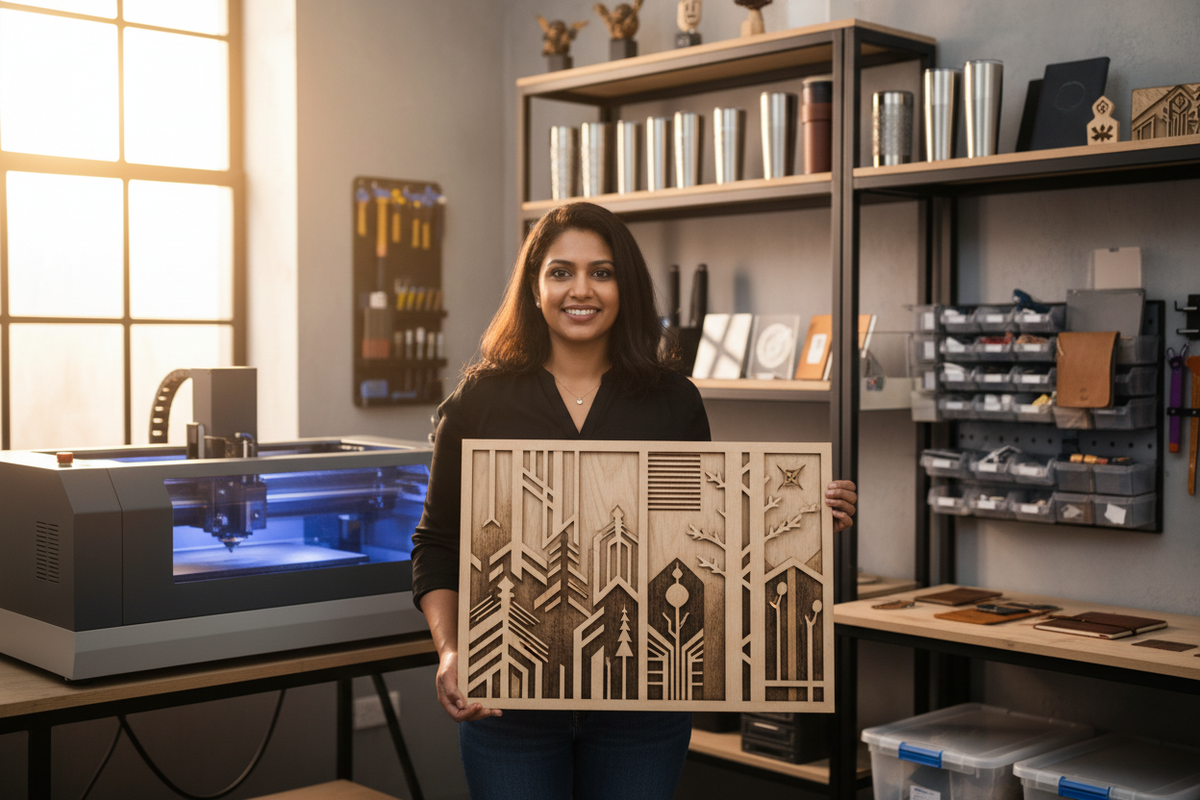
One highly lucrative area is intricate custom design and artistic engraving. This goes beyond basic text or logo engraving to encompass detailed photographic reproductions, complex geometric patterns, or multi-layered relief engravings on high-value materials like fine wood, precious metals, or artistic glass. Clients seeking such bespoke art pieces—whether for corporate gifts, interior design elements, or personal heirlooms—are willing to pay a substantial premium for exceptional craftsmanship and unique artistic vision. The artistic skill involved, combined with the precision of a high-quality laser, sets these services apart. Research from "Artisan Market Forecast 2026" projects a sustained demand for bespoke artistic and craft services, with laser engraving playing a pivotal role in modern craft (Artisan Market Forecast, 2026).
Industrial marking and serialization represents another high-margin opportunity. Many industries, from automotive to aerospace and electronics, require permanent, precise marking of parts for traceability, branding, and compliance. This often involves engraving serial numbers, QR codes, barcodes, or detailed logos onto metal, plastic, or ceramic components. These services are typically B2B, involve recurring contracts, and demand high accuracy and reliability. While the initial setup for industrial-grade lasers can be significant, the long-term contracts and high volume potential make this a very profitable segment. Adherence to industry standards like MIL-STD-130 for defense contractors adds to the value proposition.
Medical device engraving is an extremely specialized and high-value service. Devices, instruments, and implants often require permanent identification marks that are biocompatible, sterile, and highly durable. Laser engraving meets these stringent requirements perfectly, allowing for precise marking without compromising material integrity or sterility. This niche requires adherence to strict regulatory guidelines (e.g., FDA in the US) and often involves working with sensitive materials like titanium, stainless steel, and medical-grade plastics. The liability and precision involved mean that only highly skilled and certified engravers can operate in this space, justifying very high service fees.
Finally, specialized prototyping and small-batch manufacturing for designers and engineers offers significant returns. Many product designers, architects, and engineers require rapid prototyping of components or precise fabrication of small-batch custom parts from various materials. Laser engraving machines are incredibly versatile for cutting, etching, and marking a wide range of materials, making them ideal for creating concept models, jigs, fixtures, or limited-run production parts. This service leverages the laser's precision for functional rather than purely aesthetic applications, charging for machine time, material expertise, and problem-solving capabilities. Building relationships with local design firms or engineering consultancies can provide a steady flow of high-value projects.
What essential equipment and software are recommended for a profitable beginner laser engraving setup?

For a profitable beginner laser engraving setup in 2026, essential equipment includes a versatile diode or CO2 laser engraver (depending on material focus), a ventilation system, and safety gear, complemented by intuitive vector graphics software like Adobe Illustrator or CorelDRAW, and dedicated laser control software. The key is balancing initial investment with versatility and safety. While advanced industrial machines exist, beginners can achieve significant profitability with mid-range equipment by focusing on niche markets and excellent craftsmanship.
The choice of laser engraver itself is paramount. For beginners, two main types are prevalent: diode lasers and CO2 lasers. Diode lasers are generally more affordable, compact, and user-friendly, excellent for engraving on wood, leather, acrylic (darker colors), and some metals (with a coating). They are perfect for small-scale projects and beginners testing the waters. However, they struggle with clear acrylic and glass. CO2 lasers are more powerful, larger, and more expensive, but they offer greater versatility, capable of engraving and cutting a wider range of materials including wood, acrylic (all colors), glass, leather, and even some fabrics. If your business model involves engraving glass or cutting thicker materials frequently, a CO2 laser is a better long-term investment. "Laser Technology Trends 2026" reports an increase in user-friendly features and integrated safety measures across both laser types (Laser Technology Trends, 2026).
Beyond the laser itself, a robust ventilation system is non-negotiable for both safety and equipment longevity. Engraving generates fumes and particulate matter that can be harmful to your health and corrosive to your machine. This includes an exhaust fan and ducting leading outdoors, or a high-quality air filtration system specifically designed for laser exhaust. Additionally, essential safety gear such as certified laser safety glasses (specific to your laser's wavelength), a fire extinguisher, and a well-ventilated workspace are critical to prevent accidents and ensure a safe working environment.
On the software front, a powerful vector graphics program is indispensable for creating high-quality designs. Industry standards like Adobe Illustrator, CorelDRAW, or Inkscape (a free alternative) allow you to create scalable vector art that produces crisp, clean engravings. These programs provide the precision needed for intricate designs and ensure your output is professional. Learning the basics of vector design is a core skill for any laser engraver. Many online tutorials and courses are available to help beginners master these tools.
Finally, you'll need the laser control software that comes with your machine (e.g., LightBurn, RDWorks, or proprietary software). This software translates your vector designs into commands the laser understands, controlling power, speed, focus, and engraving path. Familiarity with your specific machine's software is crucial for optimizing engraving quality and efficiency. Investing time in understanding its features and capabilities will significantly impact the quality of your output and your overall productivity. Many modern laser control suites also offer simulation features, allowing you to preview your engraving path before committing to the material, saving valuable resources.
How can a small laser engraving business effectively market its products and services in 2026?

A small laser engraving business in 2026 can effectively market its products and services through a multi-channel digital strategy focusing on visual content, targeted social media advertising, SEO optimization for local searches, and strategic collaborations, all while emphasizing personalized customer experiences. Building a strong online presence and showcasing unique craftsmanship are paramount. The modern consumer journey is heavily influenced by digital interactions, making a robust online strategy indispensable for reaching target audiences and converting leads.
Visual content marketing is absolutely critical for laser engraving. Since your products are highly visual, platforms like Instagram, Pinterest, and TikTok are ideal. Showcase high-quality photos and short videos of your engraved items, behind-the-scenes glimpses of the engraving process, and customer testimonials. Use compelling visuals to tell stories about your products and their impact. "Digital Marketing Forecast 2026" highlights the continued dominance of video content and shoppable posts, advising small businesses to invest in engaging visual narratives (Digital Marketing Forecast, 2026). Create reels and stories demonstrating the transformation of raw materials into personalized treasures.
Targeted social media advertising allows you to reach specific demographics and interests. Platforms like Facebook and Instagram offer sophisticated targeting tools, letting you reach users interested in "personalized gifts," "handmade crafts," "wedding favors," or specific hobbies. Invest in small, focused ad campaigns that direct traffic to your online store or specific product pages. Regularly A/B test your ad creatives and copy to optimize performance and ensure your marketing spend is efficient.
Search Engine Optimization (SEO), especially for local searches, is vital. Optimize your website and product listings with relevant keywords like "custom laser engraving [your city]," "personalized gifts near me," or "laser engraved wood products." Ensure your Google My Business profile is complete and up-to-date, encouraging customer reviews. Local SEO ensures that when potential customers in your area search for laser engraving services, your business appears prominently. This is particularly effective for attracting B2B clients and local retail customers.
Strategic collaborations and partnerships can significantly expand your reach. Partner with local complementary businesses such as wedding planners, event organizers, photographers, boutique gift shops, or even other artisans. Offer to engrave unique items for their clients or provide branded merchandise. Cross-promotion through joint marketing efforts can introduce your services to new audiences who already have a need for custom items. Consider participating in local craft fairs, markets, and pop-up events to offer live engraving demonstrations and direct sales, creating memorable customer interactions.
Finally, focus on creating an exceptional customer experience. Personalized communication, prompt responses, quick turnaround times, and high-quality product delivery foster loyalty and generate positive word-of-mouth referrals. Encourage customers to share their purchases on social media and tag your business. Offer loyalty programs or discounts for repeat customers. In 2026, customer reviews and testimonials are more influential than ever, so actively solicit feedback and showcase your satisfied clients.
What pricing strategies ensure maximum profitability for laser engraved goods and services?
To ensure maximum profitability for laser engraved goods and services in 2026, a blended pricing strategy incorporating cost-plus, value-based, and tiered pricing, with clear consideration for design complexity and material cost, is essential. Avoid underpricing your unique craftsmanship; instead, emphasize the value of customization and quality. This approach allows you to cover your operational costs while capturing the perceived value of bespoke items, maximizing both revenue and customer satisfaction across different market segments.
Start with a cost-plus pricing model as your baseline. Calculate all direct costs associated with a product or service: material cost, machine time (depreciation, electricity, maintenance), labor time (design, setup, engraving, finishing, packaging), and shipping. Then, add a desired profit margin (e.g., 30-50% for goods, higher for unique services). This ensures that every item sold at least covers its production costs and contributes to your business's financial health. Neglecting to account for all operational costs is a common pitfall for new businesses, leading to unsustainable pricing. The "Small Business Profitability Index 2026" emphasizes accurate cost calculation as foundational for all pricing models (Small Business Profitability Index, 2026).
Next, layer in value-based pricing. Custom laser engraved items are not commodities; they offer personalization, uniqueness, and often emotional significance. Price based on the perceived value to the customer, not just your cost. For example, a personalized wedding gift has a higher emotional value than a generic one, allowing for a higher price point. If your designs are exceptionally intricate or your craftsmanship is superior, your pricing should reflect that premium quality. Emphasize the story behind the product, the care taken in its creation, and the lasting impression it will make. This shifts the customer's focus from mere cost to the overall benefit and uniqueness.
Implement tiered pricing for services and bulk orders. For services like industrial marking or large corporate orders, offer volume discounts or different service packages (e.g., standard, premium, expedited). For custom designs, you might have different tiers based on design complexity (simple text vs. complex graphic) or material choice. A basic package might include standard fonts and layouts, while a premium package offers custom artwork consultation and multiple revisions. This allows you to cater to different customer needs and budgets while maximizing revenue from high-value clients.
Consider dynamic pricing for rush orders. If a client needs an item quickly, charge a rush fee. Your time is valuable, and expediting an order often means rearranging your production schedule. This not only compensates you for the inconvenience but also manages customer expectations regarding turnaround times. Clearly communicate your standard lead times and any additional costs for expedited services upfront.
Finally, regularly review and adjust your pricing. Market conditions, material costs, and competitor pricing can change. Monitor your profit margins on different products and services. If a product isn't as profitable as expected, consider adjusting its price, finding a more cost-effective material, or refining your production process. Don't be afraid to experiment with your pricing to find the sweet spot that maximizes both sales and profitability.
How to Make Your Final Choice: My Expert Recommendation

Navigating the exciting world of laser engraving as a beginner in 2026 can feel overwhelming, but remember, every thriving business started with a single, well-chosen step. My expert recommendation for unlocking profitability lies in a thoughtful combination of passion, precision, and strategic market positioning. Don't just chase trends; find a niche that genuinely excites you and aligns with your unique skills, as this intrinsic motivation will be your most powerful asset during challenges.
First, embrace the "beginner's mindset" not as a limitation, but as an opportunity for focused learning. Start with a versatile diode laser if your budget is constrained, allowing you to hone your design skills and understand the engraving process without a massive initial investment. Once you master the fundamentals and validate your niche, upgrading to a more powerful CO2 system or specialized fiber laser will be a natural and informed progression. The core isn't the most expensive machine, but how effectively you leverage what you have.
Second, prioritize customer understanding. Dive deep into online communities, conduct informal surveys, and listen intently to feedback. Your most profitable niche will likely address a specific pain point or unmet desire. Are local businesses struggling to find unique branded merchandise? Are pet owners looking for more personalized memorials? Is there a demand for eco-friendly custom gifts? By being a solution provider, you elevate your offering beyond mere products to invaluable services.
Third, commit to an ongoing learning journey. The laser engraving industry is dynamic, with new materials, software updates, and design techniques emerging constantly. Stay curious, experiment with different materials, and continuously refine your craftsmanship. Leverage online tutorials, join engraving forums, and connect with other artisans. Your dedication to continuous improvement will not only enhance the quality of your products but also reinforce your authority and expertise in your chosen niche.
Finally, never underestimate the power of stellar marketing and strategic pricing. Showcase your work with pride through high-quality visuals, tell compelling stories about your creations, and build genuine connections with your audience. Price your products and services with confidence, reflecting not just your costs but the unique value, artistry, and personalization you bring. Remember, you're not just selling an engraved item; you're selling a memory, a statement, or a solution. By focusing on these pillars—passion, customer-centricity, continuous learning, and smart business practices—your journey from a laser engraving hobby to a thriving, profitable hustle in 2026 will be not just successful, but deeply rewarding.
Frequently Asked Questions (FAQ)
How much does it cost to start a laser engraving business in 2026?
Starting a laser engraving business in 2026 can range from $2,000 to $15,000+ for beginners, depending on equipment choice, software licenses, and initial material inventory. A budget-friendly setup might use a diode laser ($500-$2,000), while a mid-range CO2 system could be $3,000-$10,000. This initial investment covers the core machine, necessary safety and ventilation, basic design software, and a starting supply of materials to test and create samples.
The cost varies significantly based on the type and power of the laser engraver you choose. Diode lasers are ideal for those starting with a very limited budget, offering sufficient power for engraving wood, leather, and coated metals. They are generally plug-and-play and require less complex ventilation. However, their material compatibility is limited, and engraving speeds are slower than CO2 lasers.
CO2 lasers, while a larger investment, offer greater versatility in terms of materials (including glass and clear acrylic) and significantly faster engraving and cutting speeds, leading to higher productivity and a wider range of profitable product offerings. These typically require more robust ventilation systems and dedicated workspace. Beyond the machine itself, factor in the cost of graphic design software subscriptions (e.g., Adobe Creative Cloud at $20-$50/month), initial material stock (wood blanks, acrylic sheets, metal tags), and essential safety equipment like laser-safe eyewear and a fire extinguisher. Marketing costs for setting up an online store or social media presence should also be considered. While the initial outlay can seem substantial, with a well-researched niche and effective marketing, the return on investment for a laser engraving business can be quite rapid.
What is the most common mistake beginners make in a laser engraving business?
The most common mistake beginners make in a laser engraving business is underpricing their products and services, failing to account for all operational costs, and undervaluing their time, skill, and the unique custom nature of their offerings. This often leads to burnout and unsustainable profit margins. Many new entrepreneurs focus too much on competitor pricing rather than their own cost structure and the perceived value of their handcrafted items.
Beginners often calculate only the direct material cost and perhaps a rough estimate for machine time, completely overlooking critical elements such as design time, machine depreciation, electricity usage, consumables (like cleaning supplies or lens wipes), packaging, marketing efforts, and, crucially, their own labor for setup, engraving, and finishing. This oversight results in prices that are too low to sustain the business long-term or provide a living wage for the owner. Additionally, some beginners fail to educate customers on the difference between mass-produced items and bespoke, laser-engraved products, which offer superior personalization and craftsmanship. It’s essential to communicate the value proposition clearly to justify premium pricing. Overcoming this mistake requires a thorough understanding of all business expenses and the confidence to price products and services reflecting their true worth and the specialized skill involved.
Share:
5 AI Innovations: Smarter Home Personalization for Future Living
Achieve 99.9% Zero-Defect Engraving: 5 Key In-Line QC Systems