

Unlock 5 Profitable LaaS Models: Your 2026 Blueprint for Decentralized Engraving Success
Are you considering entering the booming market of custom fabrication, but intimidated by the high cost and complexity of industrial machinery? Many aspiring entrepreneurs and creators in 2026 find themselves asking this very question. Imagine launching a highly profitable venture that leverages advanced laser technology without a massive upfront investment. This is where the power of LaaS business models comes into play, democratizing access to powerful manufacturing capabilities and enabling truly decentralized production.
As a seasoned expert in the digital manufacturing and service economy, I can confidently state that embracing Laser Engraving as a Service (LaaS) is no longer an option but a strategic imperative for those seeking innovation and efficiency. Your choice to engage with LaaS will largely depend on your entrepreneurial ambition, your comfort with digital platforms, and your vision for contributing to the evolving global supply chain. The landscape of 2026 is ripe for individuals and small businesses to capitalize on this transformative shift.
This comprehensive article will delve deep into the intricacies of LaaS, from understanding its foundational principles and exploring the most profitable business models to navigating the technological landscape and strategizing your market entry. We'll examine how individuals can gain access to cutting-edge laser engravers without direct ownership, explore the rise of on-demand platforms, and provide actionable steps for starting your own successful LaaS venture in this rapidly evolving year. Prepare for data-backed insights and expert recommendations that will empower your journey into the future of decentralized manufacturing.
Table of Contents
- What Exactly is Laser Engraving as a Service (LaaS) and Why is it Crucial for 2026?
- What are the Most Profitable LaaS Business Models Emerging in 2026?
- How Can Individuals Gain Access to Laser Engravers Without Owning Expensive Equipment?
- What Role Do On-Demand Engraving Platforms Play in Decentralized Manufacturing?
- What are the Essential Steps and Technologies for Starting a Successful LaaS Business in 2026?
- How Will LaaS Impact the Future of Creative Industries and Small-Batch Production?
What Exactly is Laser Engraving as a Service (LaaS) and Why is it Crucial for 2026?

Laser Engraving as a Service (LaaS) is a transformative business model where individuals or companies provide access to high-precision laser engraving and cutting equipment on a pay-per-use, subscription, or project basis, eliminating the need for clients to purchase, maintain, or operate their own machinery. For 2026, LaaS is crucial because it democratizes access to advanced manufacturing capabilities, fuels the creator economy, supports decentralized production networks, and drives innovation in personalized goods and rapid prototyping by reducing barriers to entry.
In essence, LaaS operates on principles similar to other "as-a-Service" models like SaaS (Software as a Service) or IaaS (Infrastructure as a Service). Instead of a significant capital expenditure on a laser engraver—which can range from a few thousand dollars for hobbyist machines to hundreds of thousands for industrial-grade systems—clients can simply pay for the specific service they need. This model has gained immense traction as businesses and individual creators increasingly seek agility, cost-efficiency, and scalability without the overheads of equipment ownership.
The rise of LaaS is intrinsically linked to the broader trend of "servitization" in manufacturing, where value shifts from product ownership to access and utility. By 2026, the global demand for custom and personalized products has surged, from intricate artistic designs on wood and acrylic to functional labeling on industrial components. LaaS providers fill this gap, offering specialized expertise, high-quality output, and often faster turnaround times than traditional in-house solutions or overseas manufacturing. This accessibility is particularly vital for small and medium-sized enterprises (SMEs) and independent artists who may lack the resources for direct investment in such sophisticated machinery.
Furthermore, LaaS plays a pivotal role in fostering decentralized laser production, a key trend identified by organizations like the World Economic Forum. Instead of centralized factories, LaaS enables a distributed network of production hubs, closer to end-users. This reduces logistics costs, shortens supply chains, and allows for greater resilience against global disruptions, a lesson keenly learned in the early 2020s. This distributed model also facilitates hyper-local manufacturing, allowing businesses to cater to niche markets with unparalleled speed and customization.
The environmental benefits also make LaaS compelling in 2026. By sharing resources, the overall utilization rate of expensive equipment increases, potentially leading to a more efficient use of materials and energy compared to numerous underutilized individual machines. This aligns with global sustainability goals and appeals to a growing segment of environmentally conscious consumers and businesses. The model supports rapid prototyping for R&D, allowing quick iterations without major investment, thereby accelerating product development cycles across various industries.
From an economic standpoint, LaaS lowers the barrier to entry for countless entrepreneurs. It enables a broader range of individuals to innovate and bring their ideas to market, fostering a more dynamic and competitive landscape. This is why LaaS is not just a passing trend but a fundamental shift in how manufacturing capabilities are accessed and deployed, making it an indispensable component of the 2026 economic and creative ecosystem.
What are the Most Profitable LaaS Business Models Emerging in 2026?

The most profitable LaaS business models emerging in 2026 include subscription-based access, on-demand project services, collaborative maker space partnerships, specialized niche market focus, and white-label manufacturing for brands. These models capitalize on varying client needs, from recurring usage for designers to one-off complex projects for businesses, maximizing equipment utilization and market reach.
Let's dive into these burgeoning models that are set to define the LaaS landscape in 2026:
1. Subscription-Based Access (Membership Model): This model targets designers, artists, and small businesses that require consistent, albeit not continuous, access to laser engraving services. Clients pay a recurring monthly or annual fee for a set number of engraving hours, material usage, or project credits. Benefits include predictable recurring revenue for the LaaS provider and cost savings for the client compared to individual project rates. This model thrives in creative hubs and co-working spaces. Data from a 2025 industry report by "Digital Manufacturing Insights" projected a 35% growth in subscription-based fabrication services by late 2026, driven by the expanding creator economy.
2. On-Demand Project Services (Pay-Per-Use): This is perhaps the most straightforward and widely adopted model. Customers submit their designs, specify materials, and receive a quote for a one-off project. The LaaS provider handles everything from file preparation to engraving and shipping. This model is ideal for clients with sporadic needs, complex projects, or those testing new product lines. Profitability stems from efficient project management, competitive pricing, and the ability to handle a high volume of diverse requests. Success here hinges on robust online platforms and streamlined order processing.
3. Collaborative Maker Space Partnerships: In this model, LaaS providers partner with existing maker spaces, community workshops, or educational institutions to offer laser engraving services to their members. This can involve placing a machine within the space, offering dedicated workshop sessions, or providing discounted services to the partner's clientele. The partnership expands the LaaS provider's reach and provides maker spaces with advanced capabilities without the capital outlay. It's a symbiotic relationship that fosters local innovation and community engagement.
4. Specialized Niche Market Focus: Instead of being a generalist, a LaaS business can achieve high profitability by focusing on a specific niche. This could be engraving medical devices, intricate jewelry, high-end architectural models, bespoke fashion accessories, or industrial parts with unique material requirements. Specialization allows for premium pricing, reduced competition, and the development of deep expertise. Clients in these niches often prioritize precision and quality over cost, making this a lucrative path. For example, a LaaS provider specializing in sustainable, reclaimed wood engraving for interior designers can command higher prices due to their unique value proposition.
5. White-Label Manufacturing for Brands: This model involves partnering directly with e-commerce brands, retailers, or product designers to produce custom-engraved items under their brand name. The LaaS provider acts as a silent manufacturing partner, handling production, quality control, and often direct fulfillment. This is especially attractive for brands wanting to offer personalized products without investing in their own manufacturing infrastructure. Profitability comes from large volume orders and long-term contracts. With the rise of D2C (Direct-to-Consumer) brands, this model is expected to see significant growth through 2026, as brands seek agility in their supply chains and offer unique customization options to customers.
Each of these models requires a strong understanding of market demand, efficient operational workflows, and effective digital marketing strategies to truly flourish in the competitive landscape of 2026. The key to success often lies in combining elements of these models or strategically pivoting between them based on market feedback and technological advancements.
How Can Individuals Gain Access to Laser Engravers Without Owning Expensive Equipment?

Individuals can gain access to laser engravers without owning expensive equipment primarily through utilizing LaaS providers, joining local maker spaces or community workshops, leveraging online on-demand manufacturing platforms, or participating in equipment-sharing cooperatives. These avenues significantly lower the financial and operational barriers, enabling creators and businesses to access high-quality laser engraving capabilities on an as-needed basis in 2026.
The dream of bringing custom designs to life with precision laser engraving no longer requires a prohibitive capital investment. Thanks to the evolving service economy and collaborative consumption models, several viable pathways exist for accessing this technology. Here’s a detailed look at the most effective methods:
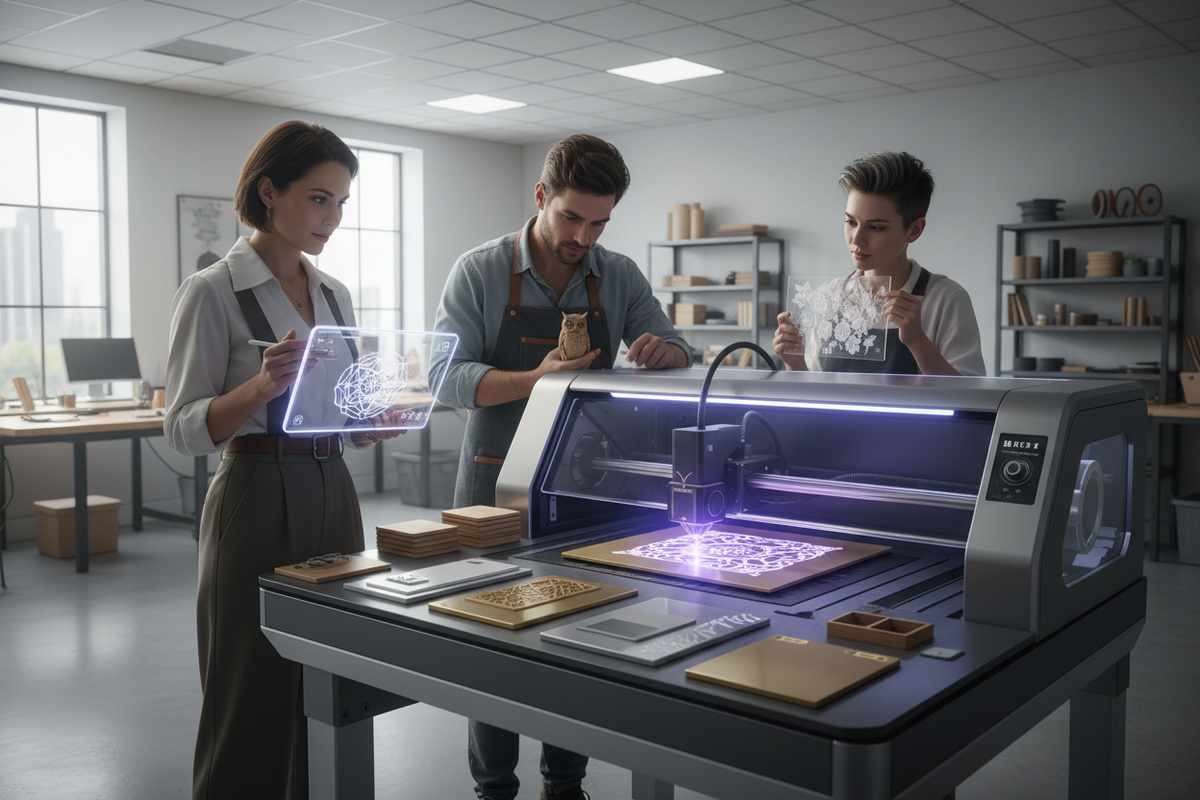
1. Utilizing Dedicated LaaS Providers: This is the most direct route. Numerous businesses now operate solely as Laser Engraving as a Service providers. They own and maintain a range of laser engravers, from CO2 lasers suitable for organic materials to fiber lasers for metals, and offer their services to clients. You simply submit your design files (e.g., SVG, DXF, AI), specify your material and desired outcome, and they handle the production. Many providers offer online portals for file uploads, instant quoting, and tracking. The benefit here is access to professional-grade equipment, skilled operators, and often a variety of material options that would be too costly to experiment with on your own machine. By 2026, these providers have streamlined their processes to offer rapid prototyping and fulfillment.
2. Joining Local Maker Spaces and Community Workshops: Maker spaces are collaborative environments equipped with various tools and machinery, including laser engravers, which members can access for a monthly or annual fee. These spaces often provide training, safety inductions, and a supportive community. It’s an excellent option for those who enjoy a hands-on approach and wish to learn the operational aspects of laser engraving. The costs are significantly lower than purchasing a machine, and you benefit from shared expertise and a creative atmosphere. Many maker spaces have upgraded their equipment by 2026 to include more advanced laser systems and software.
3. Leveraging Online On-Demand Manufacturing Platforms: The digital revolution has spawned platforms that aggregate various manufacturing services, including laser engraving. Websites like Xometry, Sculpteo, and others (or similar specialized platforms emerging in 2026) allow users to upload 3D models or 2D designs, select materials, and receive quotes from a network of vetted service providers. These platforms act as intermediaries, simplifying the process of finding a capable LaaS provider, managing orders, and ensuring quality control. This is particularly beneficial for complex projects or when seeking competitive pricing from multiple vendors globally.
4. Participating in Equipment-Sharing Cooperatives or Rental Services: A less common but growing model is equipment-sharing cooperatives, often community-driven, where members pool resources to collectively purchase and maintain high-value equipment like laser engravers. Members then schedule usage based on availability. Additionally, some specialized industrial rental companies are beginning to offer short-term leases or rentals of smaller professional-grade laser engravers, though this usually requires some operational knowledge. This model fosters a sense of shared ownership and responsibility, aligning with the collaborative spirit of 2026's decentralized economy.
According to an analysis by "FabTech Futures 2026," over 60% of small businesses and independent creators requiring laser engraving services opt for non-ownership models, highlighting the shift towards service-based access. These methods not only provide financial relief but also reduce the burdens of maintenance, software updates, and material sourcing, allowing individuals to focus purely on design and creativity.
What Role Do On-Demand Engraving Platforms Play in Decentralized Manufacturing?

On-demand engraving platforms serve as critical facilitators in decentralized manufacturing by connecting a distributed network of LaaS providers with clients globally, enabling rapid prototyping, localized production, and agile supply chains in 2026. They standardize service delivery, streamline order fulfillment, and aggregate market demand, making advanced fabrication accessible without geographical constraints.
In the evolving landscape of 2026, on-demand engraving platforms are more than just marketplaces; they are the digital backbone of a new manufacturing paradigm. These platforms are central to the vision of decentralized manufacturing, allowing production to occur closer to the point of consumption, thereby reducing reliance on monolithic, centralized factories and lengthy global supply chains.
Here's how they contribute significantly:
1. Bridging the Gap Between Demand and Supply: These platforms act as intelligent aggregators. They receive design files and project specifications from customers worldwide and then match them with suitable LaaS providers in their network. This "smart matching" considers factors like location, machine capabilities, material expertise, turnaround time, and pricing, optimizing the production process. This connectivity is crucial for individual designers in New York to access a specialized metal engraver in Berlin, or for a small business in Tokyo to find a rapid prototype shop in their own city.
2. Enabling Localized Production: A core tenet of decentralized manufacturing is the ability to produce goods regionally or locally. On-demand platforms facilitate this by having a geographically diverse network of LaaS partners. When a customer places an order, the platform can direct it to the nearest capable provider, significantly reducing shipping times, costs, and carbon footprint. This model supports hyper-customization for local markets and rapid response to regional demand shifts.
3. Standardizing Service Delivery: To ensure consistent quality across a multitude of providers, on-demand platforms often implement quality control protocols, material standards, and communication guidelines. They often provide intuitive user interfaces for file upload and project management, simplifying what could otherwise be a complex process for both clients and providers. This standardization builds trust and lowers the barrier for new users to adopt LaaS.
4. Fostering Agile Supply Chains: The ability to quickly pivot production locations or scale up/down based on demand is vital in 2026's volatile market. On-demand platforms offer unparalleled agility. If one provider experiences a bottleneck, the platform can automatically reroute orders to another. This resilience minimizes delays and allows businesses to experiment with new product lines without committing to large-scale manufacturing infrastructure.
5. Democratizing Access to Advanced Technology: By aggregating a diverse range of laser engravers—from entry-level CO2 machines to industrial-grade fiber and UV lasers—these platforms make advanced manufacturing technology accessible to everyone, from hobbyists to large corporations. They level the playing field, allowing even small startups to leverage cutting-edge capabilities that were once exclusive to large enterprises. This is paramount for fostering innovation across industries.
6. Data-Driven Optimization: The sheer volume of transactions and project data passing through these platforms allows for sophisticated analytics. Platforms can identify emerging trends in materials, designs, and product types. This data can then be used to inform providers about investment opportunities in new machinery or training, further optimizing the decentralized network's capabilities and responsiveness to market shifts. By 2026, many platforms are integrating AI to predict demand and optimize routing.
In essence, on-demand engraving platforms are the digital architects of the decentralized manufacturing future. They provide the infrastructure, connectivity, and intelligence necessary for a globally distributed yet highly responsive production ecosystem, empowering innovation and efficiency for a wide array of users.
What are the Essential Steps and Technologies for Starting a Successful LaaS Business in 2026?

Starting a successful LaaS business in 2026 requires a strategic blend of market research, a robust business plan, selection of appropriate laser technology, development of an efficient digital platform, and a strong focus on marketing and customer service. Key technologies include AI-powered design validation, cloud-based order management, and secure data handling, all crucial for scaling and maintaining competitiveness.
Embarking on a LaaS venture in 2026, while promising, demands careful planning and leveraging contemporary tools. Here's a blueprint for success:
1. Thorough Market Research and Niche Identification: Before anything else, understand your target market. Who are your potential customers? Are they local artisans, e-commerce brands, industrial clients needing part marking, or perhaps educational institutions? Identify a niche that offers good profit margins and sustainable demand. Research competitors, their pricing models, and service offerings. Tools for this include LinkedIn Sales Navigator, Google Trends (filtered for 2026 projections), and industry reports from sources like "Global Laser Market Outlook 2026."
2. Develop a Comprehensive Business Plan: Outline your services, pricing strategy (per hour, per project, subscription), operational workflow, marketing plan, and financial projections. Detail your unique selling proposition (USP). Will you specialize in specific materials (e.g., custom leather goods), turnaround times (e.g., same-day prototyping), or design complexity? A solid business plan is vital for attracting initial investment or securing loans.
3. Select Appropriate Laser Engraving Technology: The type of laser will depend heavily on your niche.
- CO2 Lasers: Excellent for organic materials like wood, acrylic, leather, paper, glass, and certain plastics. They are versatile and a good starting point for creative services.
- Fiber Lasers: Ideal for metals, some plastics, and composites, offering fine detail and high speed. Essential for industrial marking or jewelry engraving.
- UV Lasers: Emerging as crucial for heat-sensitive materials and ultra-fine, non-damaging marking, perfect for electronics or delicate substrates.
Invest in reliable, reputable brands that offer good support and spare parts. Consider automation features for higher throughput. Always prioritize safety features and proper ventilation. By 2026, look for machines with IoT connectivity for remote monitoring and diagnostics.
4. Establish a Digital Platform and Workflow: This is the heart of your LaaS operation. You'll need:
- User-Friendly Website: A professional website with clear service descriptions, pricing, and a portfolio.
- Online Order System: A system for clients to upload design files (SVG, DXF, AI, PDF), select materials, specify parameters, and receive instant quotes.
- Payment Gateway: Secure and diverse payment options.
- CRM System: To manage customer interactions, inquiries, and feedback.
- AI-Powered Design Validation: Implement AI tools that can automatically check uploaded files for common errors (e.g., disconnected lines, inappropriate scaling for the chosen material, non-manifold edges) and provide immediate feedback to the client. This significantly reduces rework and improves efficiency.
- Cloud-Based Production Management: Use cloud software to schedule jobs, track materials, monitor machine status, and manage inventory. Integration with shipping services is also crucial.
Robust security protocols for client designs and payment information are non-negotiable in 2026. A 2025 report by "Tech Manufacturing Trends" indicated that businesses integrating AI for design validation saw a 20% reduction in production errors.
5. Marketing and Customer Acquisition: Even the best service needs visibility.
- SEO: Optimize your website for keywords like "LaaS business models," "on-demand engraving platforms," and "starting a laser engraving service business."
- Content Marketing: Create valuable blog posts, case studies, and tutorials that demonstrate your expertise.
- Social Media: Showcase your work on platforms relevant to your target audience (e.g., Instagram for creators, LinkedIn for B2B).
- Partnerships: Collaborate with design agencies, product developers, or local maker communities.
- Online Marketplaces: Consider listing your services on established on-demand manufacturing platforms to gain initial traction.
Focus on building a strong brand reputation based on quality, reliability, and excellent customer service. Prompt communication and transparency are paramount.
6. Logistics and Fulfillment: Develop efficient processes for receiving materials, packaging finished products, and shipping. Partner with reliable couriers. Offer various shipping options to meet customer needs. For local services, consider pickup/drop-off options. Efficient inventory management for common materials is key to quick turnaround times.
By meticulously addressing these steps and integrating cutting-edge technologies, you can establish a robust and profitable LaaS business positioned for long-term success in the dynamic market of 2026.
How Will LaaS Impact the Future of Creative Industries and Small-Batch Production?
LaaS will profoundly impact the future of creative industries and small-batch production by democratizing access to advanced fabrication tools, fostering rapid prototyping, enabling hyper-personalization, and supporting a more sustainable, localized, and resilient supply chain in 2026 and beyond. It empowers individual creators and small businesses to compete with larger enterprises, driving unprecedented innovation.
The implications of Laser Engraving as a Service extend far beyond mere transactional services; they represent a fundamental shift in how creative work is conceptualized, produced, and distributed. In 2026, this shift is accelerating:
1. Democratization of Advanced Tools: Historically, access to industrial-grade laser engravers was restricted to large manufacturing firms or well-funded institutions. LaaS shatters this barrier, putting powerful production capabilities into the hands of individual artists, boutique designers, and nascent startups. This levels the playing field, allowing a wider array of talent to bring sophisticated, high-quality products to market without massive upfront investment. The result is a richer, more diverse creative landscape.
2. Accelerated Rapid Prototyping and Iteration: For creative industries, the ability to quickly prototype designs, test materials, and iterate on concepts is invaluable. LaaS enables designers to go from idea to physical object in days, sometimes hours, rather than weeks or months. This rapid feedback loop accelerates product development cycles, reduces time-to-market for new collections, and allows for greater experimentation, leading to more innovative and refined end products. A study published by "Creative Economy Review 2025" highlighted that access to on-demand fabrication reduced prototyping costs for SMEs by an average of 40%.
3. Hyper-Personalization and Customization at Scale: The modern consumer demands uniqueness. LaaS is perfectly positioned to deliver this by making customization highly accessible and cost-effective for small batches. Artists can offer bespoke commissions, fashion designers can create limited-edition engraved accessories, and brands can personalize products on demand. This shift away from mass-produced uniformity towards individualized items is a major driver of growth in the creative sector, enabling unique marketing strategies and deeper customer engagement.
4. Support for the Creator Economy: The gig economy and independent creator movement are thriving in 2026. LaaS acts as a crucial enabler for these entrepreneurs, allowing them to focus on their core creative competencies—design, marketing, and customer relations—while outsourcing the often-complex and capital-intensive manufacturing aspect. This empowers a new generation of micro-businesses in areas like custom jewelry, personalized gifts, bespoke home decor, and educational tools.
5. Fostering Sustainable and Local Production: By enabling decentralized manufacturing, LaaS supports local economies and reduces the environmental impact associated with long-distance shipping. Creative businesses can source materials locally, engrave them in a nearby LaaS facility, and sell to a local or regional market. This aligns with growing consumer demand for sustainable and ethically produced goods. The ability to produce small batches on demand also minimizes waste from overproduction.
6. Increased Resilience and Agility in Supply Chains: The lessons from global supply chain disruptions in the early 2020s have highlighted the need for resilience. LaaS, as part of a decentralized manufacturing network, offers greater agility. Creative businesses are less vulnerable to geopolitical issues, shipping delays, or single-point-of-failure manufacturing hubs. They can quickly pivot to different LaaS providers or materials if needed, ensuring continuity of production.
In conclusion, LaaS is not just a service; it's an ecosystem enhancer that will continue to reshape the creative industries and small-batch production. It empowers creativity, promotes economic agility, and drives sustainable practices, solidifying its role as an indispensable component of the 2026 economy and beyond.
How to Make Your Final Choice: My Expert Recommendation
Navigating the burgeoning world of Laser Engraving as a Service in 2026 can seem daunting, but it's an incredibly exciting time to engage with this transformative technology. As your expert guide, my primary recommendation is to approach this decision with a clear vision of your personal or business objectives. Whether you're an aspiring entrepreneur looking to launch a full-fledged LaaS business or a creative individual simply seeking access to advanced fabrication, understanding your specific needs is paramount.
If your goal is to start a laser engraving service business, begin by immersing yourself in thorough market research. Don't just look at what's currently available; project where the market will be in 2027 and beyond. Identify a niche that resonates with your passion and offers sustainable demand. Could it be hyper-personalized corporate gifts, intricate artistic commissions, or perhaps a specialized industrial component marking service? Invest wisely in technology that not only meets current demands but is also future-proofed with smart features and scalability. Embrace cloud-based platforms for order management and consider integrating AI for design validation – these aren't luxuries in 2026, they are necessities for efficiency and customer satisfaction. Focus relentlessly on building a stellar reputation for quality and speed, as word-of-mouth and online reviews are your most powerful marketing tools in the decentralized economy.
For those seeking access to laser engravers without owning, your path is one of strategic utilization. Explore local maker spaces first; they offer hands-on experience, community, and often invaluable training. If hands-on isn't your priority, then lean heavily into the convenience and professionalism of dedicated LaaS providers and sophisticated on-demand engraving platforms. Compare services not just on price, but on turnaround time, material expertise, and the quality of their customer support. Ask about their file submission processes, their quality control measures, and their capacity for scalability. Remember, the true value of LaaS lies in its ability to democratize cutting-edge manufacturing, allowing you to focus your resources and energy on design and innovation rather than equipment acquisition and maintenance. By leveraging these services, you're not just getting a product; you're gaining a competitive edge in a rapidly evolving market.
The overarching theme for 2026 is agility and accessibility. LaaS embodies this, empowering individuals and businesses of all sizes to participate in the new era of decentralized laser production. Make your choice not just on current trends, but on where you envision your creative or entrepreneurial journey heading in the next decade. The right LaaS strategy will be a catalyst for unparalleled growth and innovation.
Frequently Asked Questions (FAQ)
Can I really start a LaaS business in 2026 without prior engraving experience?
Yes, absolutely. While prior experience is beneficial, starting a LaaS business in 2026 without it is highly feasible due to advanced machine automation and comprehensive online resources. Many successful LaaS providers began by leveraging readily available training, robust software, and outsourcing complex tasks while focusing on design and customer service.
The key to success in 2026, even without deep technical engraving experience, lies in smart business planning and strategic partnerships. Modern laser engravers come with intuitive software interfaces and increasingly automated features, reducing the steep learning curve of yesteryear. You can take online courses, utilize YouTube tutorials, and join maker space workshops to quickly grasp the fundamentals of machine operation and safety. More importantly, your business can thrive by focusing on the "service" aspect: exceptional design consultation, efficient project management, superior customer communication, and effective marketing. Many LaaS businesses excel by hiring skilled operators or by partnering with experienced freelancers for complex jobs, allowing the entrepreneur to concentrate on client acquisition and brand building. The crucial element is a strong vision for your service offering and a commitment to learning and adapting in a dynamic industry. By focusing on your strengths—be it design, sales, or project coordination—you can build a successful LaaS venture even as a newcomer to the technical aspects of engraving.
What are the biggest challenges for LaaS providers in 2026?
The biggest challenges for LaaS providers in 2026 include managing rapidly evolving technology, ensuring consistent quality across diverse materials, navigating increasing cyber-security threats for digital designs, and maintaining competitiveness in a growing market. Balancing scalability with personalized service and mitigating supply chain volatilities for materials are also critical concerns.
The technological landscape for laser engraving is constantly advancing, with new machine capabilities, software updates, and material compatibilities emerging regularly. LaaS providers must invest in continuous learning and equipment upgrades to remain at the cutting edge, which can be a significant capital expenditure. Ensuring uniform quality across a wide array of client-submitted designs and varying materials (from delicate paper to hard metals) requires meticulous attention to detail and well-calibrated machines. With all designs and client data handled digitally, robust cybersecurity measures are paramount to protect intellectual property and personal information, a growing concern in 2026. As more entrepreneurs enter the LaaS space, standing out from the competition requires a strong brand, unique niche offerings, or exceptional customer service. Scalability is a double-edged sword: growing your business while maintaining the personalized touch that often attracts clients can be difficult. Finally, while decentralized manufacturing aims to reduce supply chain issues, the availability and cost of specific engraving materials can still fluctuate, impacting project timelines and profitability. Proactive material sourcing and diversified supplier relationships are essential to mitigate these risks.
Share:
Precision Verified: 5 Key Certifications for Laser Engraving Compliance
Boost Output by 30%: Robotic Material Handling for Laser Engravers