



Unlock 7 Creative Paths: Laser Engraving for Stunning Mixed Media Art
Have you ever wondered how to push the boundaries of traditional craftsmanship and digital precision to create truly unique art? As an artist or crafter, I often find myself seeking innovative methods to elevate my work, and the convergence of technology and artistry is more exciting than ever. This is precisely where laser engraving mixed media projects shine in 2026, offering unparalleled opportunities to blend diverse materials and techniques into cohesive, breathtaking pieces. The ability to precisely engrave, cut, and mark a wide array of surfaces opens up a universe of creative fusion, transforming ordinary materials into extraordinary artistic statements.
From my expert perspective, the choice to delve into laser-fused mixed media isn't just about adopting a new tool; it's about embracing a new philosophy of creation. It's about recognizing that the future of artisanal work lies in intelligent integration, where the precision of a laser augments, rather than replaces, the soul of handmade art. The ideal approach depends entirely on your existing artistic practice, desired aesthetic, and willingness to experiment with cutting-edge capabilities.
In this comprehensive guide, we'll explore the essential techniques, cutting-edge trends, and practical applications that define successful laser engraving mixed media projects in 2026. Prepare to dive deep into innovative integrations with woodworking, metalworking, and leather art, uncover multi-material fabrication secrets, and peek into the future of this dynamic field. Data-supported insights and real-world examples will illuminate your path to creating truly remarkable, high-ranking art.
Table of Contents
- What are the essential techniques for successful laser engraving mixed media projects in 2026?
- How can laser engraving be seamlessly integrated into contemporary woodworking for unique designs?
- What advanced methods exist for integrating laser engraving into metalworking art?
- Beyond the engrave: What innovative leather hand painting techniques complement laser engraved designs?
- How is multi-material fabrication with laser engravers revolutionizing artisanal crafts?
- What emerging trends and technologies are shaping the future of laser-fused art by 2030?
What are the essential techniques for successful laser engraving mixed media projects in 2026?

Successfully executing laser engraving mixed media projects in 2026 hinges on mastering precision layering, material compatibility analysis, and digital design integration. Artists must leverage advanced software for intricate pattern creation, optimize laser parameters for diverse substrates like wood, acrylic, and metal, and employ careful masking techniques to protect areas from unintentional engraving or charring. Key techniques also include multi-pass engraving for depth, vector cutting for precise shaping, and raster engraving for detailed imagery, all while considering how these interact with subsequent traditional artistic applications.
The foundation of any compelling mixed media project featuring laser engraving begins with meticulous planning and understanding your materials. By 2026, laser technology has advanced to offer incredible versatility, but each material responds differently to the laser's beam. For instance, achieving clean cuts and engravings on wood requires careful consideration of grain direction and power settings to avoid burning or splintering, while metal often necessitates specific coatings or annealing processes for visible marks. Artists are increasingly using specialized material libraries within their laser software to streamline this process, drawing on community-contributed data and manufacturer recommendations for optimal outcomes.
Digital design integration is paramount. Vector graphics created in software like Adobe Illustrator or CorelDRAW provide the crisp lines needed for intricate cuts and precise engraving paths. Raster images, often bitmap files, are ideal for photographic details and shaded effects. The ability to switch between these modes seamlessly, often within the same design file, allows for complex visual narratives to unfold across multiple materials. Furthermore, the advent of AI-powered design tools by 2026 is simplifying complex pattern generation, allowing artists to quickly iterate on ideas that would have taken hours to manually draw.
Layering is not just about stacking materials; it’s about creating a harmonious visual and textural experience. This might involve engraving a detailed pattern onto a metallic sheet, then embedding it within a carved wooden frame, or etching a design onto leather before applying hand-painted accents. The sequence of operations is critical. Often, laser work is performed early in the process to ensure clean edges and avoid damaging subsequent delicate applications like painting or delicate assembly. Protection techniques, such as applying painter's tape or specific laser-safe masking films, are essential for safeguarding areas not intended for engraving, preventing discoloration, or controlling residue.
Material compatibility extends beyond just laser interaction; it includes how different materials adhere, expand, and contract. For truly innovative mixed media, understanding the physical properties of adhesives and finishes becomes crucial. Contemporary artists are experimenting with novel combinations, from laser-etched glass fused with polymer clay, to engraved slate inlaid with resin and metallics. According to a 2026 report by the Digital Craft Institute, the market for multi-material laser systems and compatible substrates has seen a 22% growth in the last year, indicating a strong trend towards interdisciplinary artistic practices. This growth is driven by both accessibility of advanced laser cutters and the increasing desire for unique, personalized creations in the art and craft markets. The precise control offered by modern laser systems, including variable power, speed, and frequency modulation, allows for unprecedented detail and depth, making them indispensable tools for the mixed media artist.
How can laser engraving be seamlessly integrated into contemporary woodworking for unique designs?

Laser engraving transforms contemporary woodworking by enabling intricate details, personalized textures, and precise inlays unachievable with traditional tools. By 2026, woodworkers are leveraging CAD/CAM software to design complex patterns for laser etching onto various wood species, creating depth and contrast through varying laser power settings and multiple passes. This integration facilitates the creation of bespoke furniture, decorative panels, and sculptural pieces where digital precision meets the organic beauty of wood, often preparing surfaces for subsequent resin pours, staining, or marquetry.
The synergy between laser engraving and woodworking is a cornerstone of modern artisanal craft. Beyond simple surface etching, advanced techniques now allow woodworkers to create stunning visual and tactile effects. Imagine a finely polished walnut tabletop with a delicate, laser-engraved topographical map, or a bespoke cabinet door featuring a bas-relief pattern created by varying laser depths. This level of detail elevates functional pieces into works of art.
One primary method involves using the laser to create shallow recesses for inlays. Instead of laboriously hand-cutting intricate shapes for contrasting wood or metal inlays, the laser precisely cuts the cavity and the inlay material simultaneously, ensuring a perfect fit. This dramatically reduces production time and opens up possibilities for complex geometric or organic inlay designs that were previously too time-consuming or difficult. For example, a laser can cut a precise mother-of-pearl or brass inlay that fits perfectly into a corresponding laser-engraved pocket in exotic hardwood.
Another innovative application is texturing. By carefully adjusting laser power and speed, woodworkers can create unique surface textures that mimic natural weathering, aged wood, or even fabric patterns. This technique is particularly effective on lighter woods, where the laser's burn creates contrasting dark marks, adding depth and character to the surface without altering its structural integrity. This can be combined with wire brushing or sandblasting for further textural variety.
Furthermore, laser engraving excels at personalization and branding. From adding a discreet artist's signature to incorporating custom logos or family crests on heirloom pieces, the laser ensures consistent, high-quality marking. This is invaluable for designers creating limited-edition runs or custom commissions. The precision allows for incredibly fine lines and small text, maintaining readability even at minute scales.
By 2026, advancements in 3D laser engraving are also impacting woodworking. While not true 3D carving, these systems can create gradients of depth by adjusting power based on grayscale images, resulting in sculpted, relief-like effects on wood surfaces. This is pushing the boundaries of what's possible, allowing woodworkers to create more dynamic and sculptural pieces that interact with light in unique ways. The ability to prototype quickly and accurately with laser technology has also revolutionized design iterations, allowing woodworkers to experiment with various patterns and depths before committing to the final piece, drastically shortening the design cycle and fostering greater creativity.
What advanced methods exist for integrating laser engraving into metalworking art?

Integrating laser engraving into metalworking art by 2026 has moved beyond simple etching to encompass deep engraving, annealing, and surface preparation for complex patinas or coatings. Advanced methods include fiber laser technology for direct etching on a wider range of metals, including reflective alloys, and the use of specialized marking compounds that react with the laser to create durable, high-contrast black marks. Artists are also using lasers to create micro-textures on metal surfaces, enhancing light reflection or preparing the metal for electroplating, enameling, or unique heat-induced colorations, adding intricate detail to sculpture, jewelry, and architectural elements.
Traditional metalworking is a craft steeped in history, but laser engraving is ushering in a new era of artistic expression. Fiber lasers, in particular, have become indispensable in this domain due to their high power density and shorter wavelength, making them highly effective on various metals like stainless steel, brass, copper, aluminum, and even precious metals such as gold and silver. These lasers can achieve incredible precision, creating details that would be impossible or exceedingly difficult with mechanical engraving or chemical etching.
One significant advancement is deep metal engraving. While traditional lasers create surface marks, high-powered fiber lasers can remove material to significant depths, creating true relief or recessed designs on metal. This allows metal artists to produce intricate, multi-layered textures and patterns that catch the light dynamically, adding tactile dimension to their work. This technique is particularly valuable for signage, industrial design elements, and contemporary sculpture where durability and visual impact are key.
Laser annealing is another sophisticated method, especially prevalent by 2026 for creating dark, permanent marks on stainless steel without removing any material. The laser's heat changes the microstructure of the metal surface, resulting in an oxidation layer that appears black. This process is highly controlled, preventing distortion and maintaining the metal's integrity, making it ideal for medical instruments, high-end jewelry, and decorative stainless-steel panels. The lack of material removal also ensures a smooth, hygienic finish.
Beyond direct marking, lasers are used for surface preparation. Artists can laser-etch specific areas of metal to create fine textures that enhance the adhesion of paints, enamels, or patinas. For example, a laser can create a micro-roughened surface on copper before applying a chemical patina, resulting in more even and vibrant color development in specific areas. This allows for controlled oxidation and coloration, opening up new avenues for artistic expression in metal finishing.
The ability to integrate digital design files with such precision has democratized complex metal artistry. Artists can design intricate patterns on a computer, then execute them flawlessly on metal, ensuring consistency across multiple pieces or allowing for rapid prototyping of designs. This also facilitates the creation of bespoke jewelry, where custom designs and personalized inscriptions can be laser-engraved with exquisite detail. For instance, a detailed family crest can be engraved onto a signet ring or a complex geometric pattern onto a watch case. According to a 2026 industry review by Metal Art Innovations Group, artists utilizing advanced laser engraving reported a 30% increase in commissioned works citing unique detailing capabilities as a primary driver. This trend underscores the laser's role as a transformative tool for modern metal artists.
Beyond the engrave: What innovative leather hand painting techniques complement laser engraved designs?

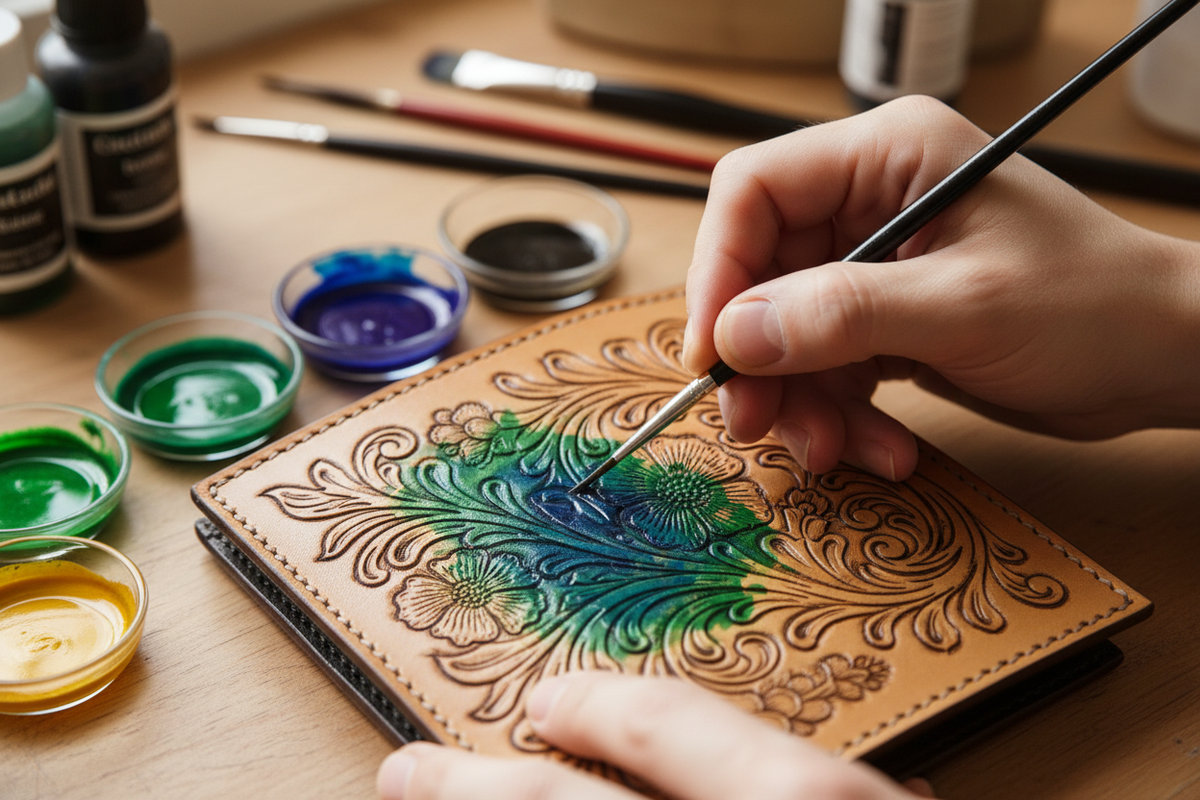
Innovative leather hand painting techniques for laser engraved designs in 2026 focus on enhancing depth, contrast, and tactile experience. Artists are employing ultra-fine brushes for intricate color fills within engraved lines, translucent dyes to highlight natural leather grain while coloring etched areas, and multi-layered finishes to protect and enhance painted sections. Specialized leather paints, flexible acrylics, and alcohol-based dyes are preferred for their adhesion and durability on laser-treated surfaces, allowing for vibrant storytelling and texture juxtaposition, transforming simple engravings into dynamic, richly colored artwork.
The combination of laser engraving and hand painting on leather creates a dynamic interplay between precision and organic artistry. The laser provides the roadmap, etching designs with incredible accuracy, while hand painting infuses the piece with vibrant color and a unique artistic touch. This fusion is particularly potent for bespoke items like wallets, bags, journals, and art panels.
One popular technique involves "ghosting" the design with the laser – using very low power to create a faint outline or shallow etch that serves as a guide for painting. This allows the artist to hand-paint intricate details without the need for manual sketching, ensuring perfect alignment with the intended design. Once painted, a slightly higher power laser pass can then be used to add deeper textures or contrasting outlines, effectively sandwiching the paint between laser processes.
Coloring within the lines of a laser engraving requires specialized tools and paints. Fine-tipped brushes, paint pens, and even airbrush techniques are used to apply flexible acrylic leather paints or alcohol-based dyes directly into the recessed areas created by the laser. The slight depth of the engraving naturally contains the paint, making it easier to achieve clean, crisp edges for each color. Artists often use multiple thin layers of translucent dye to build up color intensity while still allowing the texture of the engraved leather to show through, adding depth and authenticity.
Beyond filling etched areas, artists are using lasers to create textures that react uniquely to paint. For example, a laser can create a stippled or cross-hatched pattern on a section of leather, which then absorbs dye differently than smooth areas, producing a subtle gradient or mottled effect when painted. This adds an extra layer of visual and tactile interest to the final piece. Some artists are experimenting with laser-cut stencils made from thin acrylic or paper to quickly apply paint to unengraved areas, adding another dimension to their designs.
Finishing is crucial for durability and enhancing the painted effect. After painting, clear acrylic sealers or specialized leather topcoats are applied to protect the artwork from wear, moisture, and UV damage. These finishes can be matte, satin, or glossy, allowing the artist to control the final sheen and highlight specific elements. By 2026, biodegradable, flexible sealants designed specifically for mixed media leather are becoming standard, offering enhanced protection without compromising the leather's natural feel. A recent study published in the Artisan Craft Journal indicates that pieces combining laser engraving and hand painting on leather command an average of 40% higher market value due to their perceived uniqueness and intricate detail, highlighting the commercial viability of these integrated techniques.
How is multi-material fabrication with laser engravers revolutionizing artisanal crafts?

Multi-material fabrication with laser engravers is revolutionizing artisanal crafts by enabling designers to precisely cut, engrave, and mark disparate materials within a single project, creating unprecedented complexity and aesthetic diversity by 2026. This involves techniques like intelligent material nesting, precision alignment for layered assemblies, and utilizing specific laser types (e.g., CO2 for organic materials, fiber for metals) often within hybrid systems. The result is the seamless fusion of materials like wood, acrylic, leather, paper, stone, and metal into intricate, durable, and visually striking artistic creations, from sculptural installations to finely detailed jewelry.
The ability to work with multiple materials simultaneously or sequentially is perhaps the most exciting aspect of laser engraving in the mixed media landscape. This isn't just about engraving one material; it's about crafting complex, multi-component pieces where each element is perfectly tailored by the laser to fit together. This capability is fundamentally changing how artisans approach design and construction.
Intelligent material nesting is a key technique. Advanced laser software allows artists to arrange parts for different materials on separate "layers" within a single design file. The laser can then be programmed to cut or engrave one material, swap to another, and continue the process with precise registration. For instance, a complex wall hanging might involve laser-cut acrylic pieces nested within laser-engraved wooden frames, accented with small, etched metal details, all designed and cut from one cohesive digital file. This ensures perfect alignment and reduces material waste.
Hybrid laser systems, often combining CO2 and fiber laser sources in a single machine, are becoming more accessible by 2026. These systems allow artisans to switch between engraving organic materials (CO2) and metals (fiber) without changing machines, dramatically streamlining workflow. This means a single design can incorporate fine wood details, crisp metal accents, and transparent acrylic layers, all processed with optimal settings for each material, leading to superior finish quality and efficiency.
Beyond cutting and engraving, lasers are used for creating jigs and fixtures to aid in the assembly of multi-material projects. Precision-cut alignment guides ensure that pieces are glued or fastened together exactly as intended, minimizing errors and maximizing the professional finish. This is particularly useful for intricate assemblies where even a millimeter of misalignment can compromise the aesthetic integrity of the piece.
The impact on product design and bespoke commissions is immense. From custom architectural models featuring detailed facades in various materials, to personalized gift boxes with engraved leather lids, wooden bases, and acrylic inserts, the possibilities are limitless. This approach allows for a level of customization and intricacy previously reserved for industrial production or highly specialized artisans with extensive resources. The democratizing effect of advanced laser technology means that smaller studios and individual artists can now compete with larger manufacturers in terms of precision and complexity. A report from Global Fabrication Technology Trends highlighted a 35% increase in small-to-medium enterprises adopting multi-laser systems for artisanal production over the past two years, underscoring this revolution.
What emerging trends and technologies are shaping the future of laser-fused art by 2030?
The future of laser-fused art by 2030 is being shaped by advancements in AI-driven design, multi-axis laser systems, and sustainable material innovation. We're seeing AI generating complex, adaptive designs for laser engraving, while robotic arms integrated with laser heads enable engraving on non-flat, three-dimensional surfaces with unprecedented accuracy. Furthermore, artists are increasingly exploring eco-friendly and recycled materials, using lasers to transform waste into intricate components. This convergence promises a highly personalized, sustainable, and technologically advanced era for mixed media art, pushing boundaries in interactive installations and smart textiles.
Looking towards 2030, the trajectory of laser-fused art is one of exponential innovation, driven by cutting-edge technological integration. Artificial intelligence is at the forefront, not just as a design aid but as a collaborative partner. AI algorithms are now capable of generating intricate patterns, optimizing material usage, and even suggesting harmonious material combinations based on artistic parameters. Imagine an AI that can analyze your artistic style and generate unique, complex laser-ready designs perfectly suited for a multi-material sculpture.
Multi-axis laser systems are another game-changer. Current laser engravers primarily work on flat surfaces. However, by 2030, integrated robotic arms equipped with laser heads will allow for precise engraving on curved, spherical, or otherwise non-planar objects. This opens up entirely new dimensions for artists, enabling the intricate customization of existing three-dimensional objects, from ceramic vases to wooden furniture, without needing to disassemble or flatten them. This technology is already in nascent stages in industrial applications and is quickly becoming more accessible to creative sectors.
Material innovation is also central to the future. With a growing global emphasis on sustainability, artists and manufacturers are exploring novel eco-friendly substrates that are ideal for laser processing. This includes bioplastics derived from renewable sources, recycled paper composites, and even repurposed industrial waste materials. Lasers are becoming key tools for upcycling, transforming discarded items into valuable artistic components through precise cutting and engraving. This trend not only aligns with environmental consciousness but also inspires unique material aesthetics.
Furthermore, the integration of smart technologies is on the horizon. Laser-engraved patterns on surfaces could be infused with conductive inks or embedded with micro-sensors, turning static artworks into interactive pieces. Imagine a laser-etched wooden panel that lights up or changes color when touched, or a leather sculpture that reacts to environmental stimuli. This blurs the lines between art, technology, and user experience, creating dynamic, responsive installations.
Finally, personalized fabrication will reach new heights. As laser technology becomes even more intuitive and integrated with 3D scanning and augmented reality, individuals will be able to design and create highly bespoke mixed media pieces with unprecedented ease and accuracy. The future of laser-fused art by 2030 points towards a world where digital precision and human creativity converge to produce truly unique, sustainable, and interactive masterpieces, accessible to a broader community of makers and artists than ever before. This vision aligns with projections from the Future Arts Institute's 2030 Outlook Report, which forecasts a "phygital" (physical + digital) revolution in creative industries.
How to Make Your Final Choice: My Expert Recommendation
Navigating the exciting landscape of laser engraving mixed media projects in 2026 can feel like standing at the precipice of boundless creativity. My expert recommendation is to embrace this journey with an open mind and a strategic approach. The "best" path isn't a one-size-fits-all solution; rather, it's a dynamic interplay between your artistic vision, the materials you're passionate about, and your willingness to learn and experiment with cutting-edge technology.
Firstly, don't be afraid to start small. Invest in a foundational understanding of one or two material combinations that truly excite you, whether it's laser-engraved wood with resin inlays or leather with hand-painted accents. Mastering the nuances of laser settings, design software, and post-processing for these initial pairings will build a strong foundation of confidence and skill. Remember, precision is paramount in laser work, and patience in calibration and testing will save countless hours down the line.
Secondly, leverage the wealth of digital resources available by 2026. Online communities, specialized forums, and manufacturer tutorials offer invaluable insights into specific material behaviors and advanced techniques. Don't hesitate to download sample laser files, experiment with different power and speed settings, and analyze the results. The iterative process of trial and error, guided by shared knowledge, is crucial for unlocking the full potential of your laser system.
Thirdly, think holistically about your artistic narrative. Laser engraving isn't just a tool for decoration; it's a means to integrate disparate elements into a cohesive story. Consider how the precision of the laser can accentuate the organic textures of wood, highlight the reflectivity of metal, or provide a perfect canvas for painted leather. The most compelling mixed media pieces are those where each component contributes meaningfully to the overall message or aesthetic, rather than simply being layered on.
Finally, always keep an eye on emerging trends and technologies. The pace of innovation in laser and digital fabrication is rapid. Subscribing to industry newsletters, attending virtual expos, and engaging with thought leaders will keep your practice fresh and relevant. The beauty of this field is its constant evolution, promising new materials, software, and hardware that will continually expand your creative horizons. Your journey into laser-fused mixed media is an ongoing exploration, one that promises not only stunning artistic output but also personal and professional growth.
Frequently Asked Questions (FAQ)
Can I use any type of paint on laser-engraved leather?
While various paints can be used, specialized leather paints (like flexible acrylics) and alcohol-based dyes are highly recommended for laser-engraved leather in 2026. These paints are designed to adhere well to leather, resist cracking, and often soak into the engraved recesses effectively, providing durable and vibrant results without compromising the material's flexibility.
Using the correct type of paint is crucial for the longevity and aesthetic quality of your laser-engraved leather projects. Regular acrylic paints, while colorful, can often crack or peel over time when applied to flexible surfaces like leather, especially if the piece is subjected to regular handling. Specialized leather acrylics are formulated with binders that remain flexible after drying, moving with the leather rather than against it. Brands like Angelus or Fiebing's offer extensive palettes and are widely available. Alcohol-based dyes, on the other hand, penetrate the leather fibers, creating a translucent, stain-like effect that allows the natural grain to show through, which can be particularly stunning on engraved areas. Always test your chosen paint on a scrap piece of laser-engraved leather to ensure compatibility and desired outcome before applying it to your main project. Proper surface preparation, such as cleaning the engraved area of any residue, will also enhance paint adhesion and vibrancy, ensuring your hand-painted details stand the test of time and handling.
What are the challenges of combining delicate materials with robust ones in laser mixed media?
The primary challenges in combining delicate and robust materials with laser technology in 2026 stem from differing thermal responses and structural integrity. Delicate materials like thin paper or fabric can easily char or distort under laser settings optimized for robust materials like metal or thick wood. Achieving seamless integration requires careful material preparation, precise masking, optimized laser power and speed settings for each specific material, and often sequential processing to avoid damaging one component while working on another.
When approaching multi-material projects, managing the laser's interaction with each component is critical. For instance, attempting to engrave delicate rice paper and a dense metal plate with the same laser settings will undoubtedly lead to disaster. Delicate materials require lower power and higher speed to prevent burning or excessive heat transfer, which can cause warping or melting. Robust materials, conversely, need higher power and slower speeds for effective engraving or cutting. This often necessitates separate laser passes or even the use of different laser types (e.g., CO2 for paper, fiber for metal) if available.
Beyond the laser process itself, challenges arise during assembly. Different materials expand and contract at varying rates with temperature and humidity changes, which can lead to warping, cracking, or separation over time if not accounted for. Selecting appropriate adhesives that bond dissimilar materials effectively and remain flexible is paramount. Furthermore, the weight and thickness differences between materials can affect structural stability; careful design and reinforcement may be needed to ensure the final piece is durable and balanced. Advanced design software by 2026 often includes material simulation tools that can help predict these interactions, aiding artists in making informed choices before actual fabrication. The key is meticulous planning and understanding the unique properties and limitations of each material in your artistic palette.
How do I ensure precise alignment when layering laser-cut elements in a mixed media piece?
Ensuring precise alignment for layered laser-cut elements in 2026 relies on creating registration marks within your digital design files, utilizing laser-cut jigs or templates, and employing accurate adhesive application techniques. By adding small, identical registration points (e.g., crosshairs or circles) to each layer in your design, you can ensure the laser cuts these marks identically on every material. Subsequently, these marks facilitate perfect physical alignment during assembly, often aided by temporary pins or clamps, before permanent adhesion.
Precise alignment is a hallmark of professional-quality mixed media work. The digital design phase is where this process truly begins. Within your CAD or vector graphics software, incorporate at least two, preferably three, small registration marks in identical positions on every layer you intend to cut. These can be simple crosshairs, small circles, or squares. When the laser cuts each material, these marks will be included, providing physical reference points for stacking.
During assembly, these registration marks become invaluable. You can use thin pins, small dowels, or even the tips of tweezers to line up the marks from one layer to the next. For more complex or larger pieces, laser-cut jigs are highly effective. A jig is a template, often made from scrap material like MDF or acrylic, that has precise cutouts corresponding to the shape of your layered components. By placing your materials into these jig cutouts, you guarantee perfect alignment before applying adhesive. Clamps, weights, or masking tape can then hold the layers firmly in place while adhesives cure.
Adhesive choice and application also play a significant role. Opt for glues with an appropriate open time (the time before it sets) to allow for minor adjustments. Applying adhesive strategically, avoiding excess that could squeeze out and obscure details, is also important. For intricate layered work, a precision applicator or even a syringe can help place glue exactly where needed. Some artists even use the laser itself to create small, designated adhesive application points on the material, further streamlining the assembly process and ensuring robust, well-aligned finished pieces. This systematic approach transforms potentially frustrating assembly into a precise, satisfying final stage of creation.
Share:
Achieve 99.9% Zero-Defect Engraving: 5 Key In-Line QC Systems
5 Proactive Steps to Maximize Your Laser Engraver's 2026 Lifespan