

7 Proven Steps to Forge Your Unique Laser Engraving Style & Brand
Are you a laser engraver feeling the pressure to stand out in an increasingly crowded digital landscape? Perhaps you're wondering how to develop a compelling laser engraver personal brand that resonates deeply with clients and showcases your true artistic potential.
As an authority in digital craftsmanship and market differentiation, I've observed that merely owning advanced laser technology isn't enough in 2026. The true mark of success lies in cultivating an artistic voice so distinct it becomes instantly recognizable. Your ultimate choice in style, subject matter, and execution will deeply reflect your personal vision, lifestyle, and aesthetic preferences.
This in-depth article will guide you through the essential strategies for finding and refining your unique artistic identity. We'll explore critical questions, supported by current industry insights and forward-looking data, designed to help you not just compete, but truly lead in the evolving world of laser art.
Table of Contents
- What Defines a Truly Unique Artistic Voice in Laser Engraving?
- How Can Laser Artists Discover Their Signature Style and Vision in 2026?
- What Are the Key Strategies for Developing a Strong Laser Engraver Personal Brand?
- Where Can Creative Entrepreneurs Find Artistic Inspiration for Laser Art Projects?
- How Can I Stand Out in the Competitive 2026 Laser Engraving Market?
- What Future Trends Should Laser Artists Embrace to Maintain Uniqueness?
What Defines a Truly Unique Artistic Voice in Laser Engraving?

A truly unique artistic voice in laser engraving is characterized by a distinctive combination of technique, thematic consistency, and emotional resonance that differentiates an artist's work from others. It's about developing a consistent aesthetic signature that reflects individual perspective and creative intent, moving beyond mere technical proficiency to create recognizable and impactful art. This encompasses not just what is engraved, but how it is engraved, the story it tells, and the feeling it evokes, forming a coherent body of work.
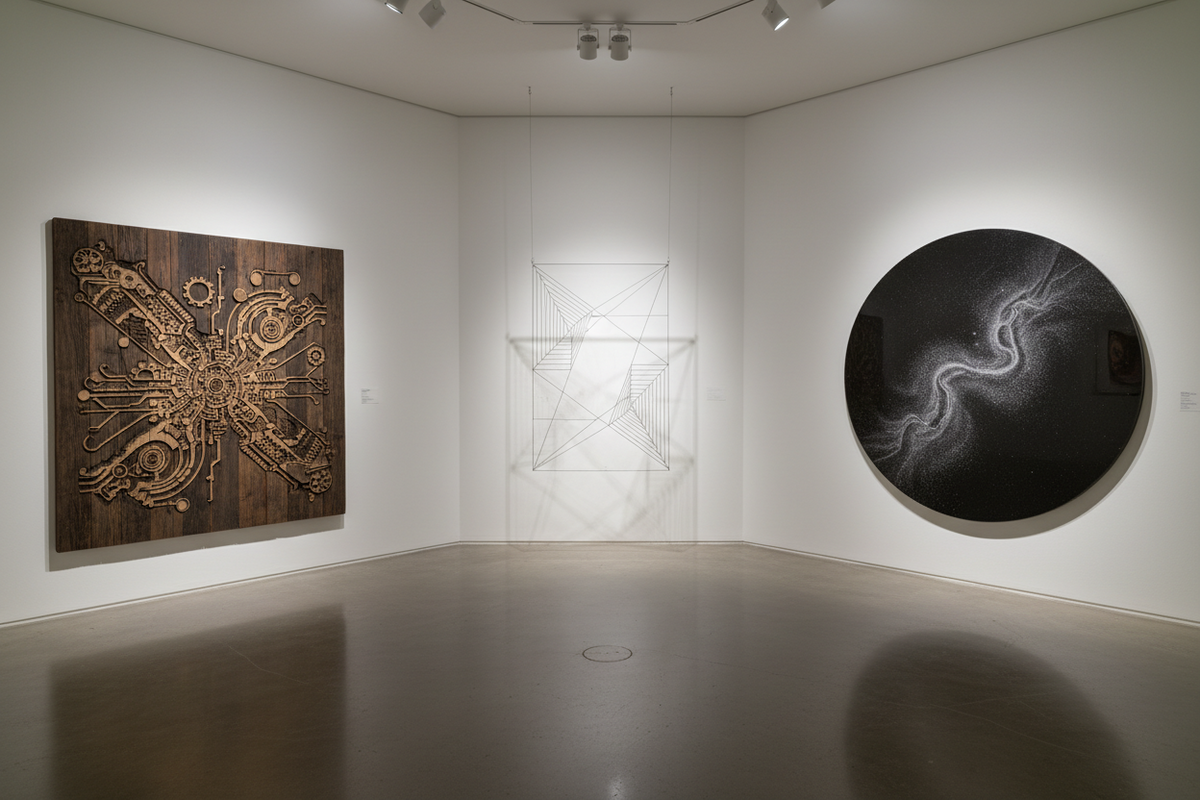
In 2026, the market for personalized and artisanal goods continues its robust growth trajectory, valuing authenticity above all. A unique artistic voice in laser engraving isn't just about technical skill; it's about an artist's signature style. This means consistently applying particular design elements, subject matter, and even emotional undertones that become synonymous with their work. For example, one artist might specialize in intricate, biomechanical designs on reclaimed wood, while another focuses on minimalist geometric patterns etched onto acrylic, each with an instantly recognizable aesthetic.
Beyond visual elements, the choice of materials plays a crucial role. Utilizing unconventional materials or applying traditional engraving techniques to new surfaces can significantly contribute to uniqueness. Consider an artist who masters engraving on multi-layered composites to create stunning depth, or another who uses specialized laser settings to achieve painterly gradients on glass. These material innovations, combined with a distinct visual language, elevate craft into art.
Furthermore, an authentic artistic voice is often imbued with a deeper narrative or philosophy. Artists who convey a story, an emotion, or a particular worldview through their engravings tend to resonate more deeply with an audience that increasingly seeks connection and meaning in their purchases. This could be environmental themes, explorations of cultural identity, or purely abstract expressions of emotion. The best artists in 2026 are not just creators but storytellers, using light and shadow to articulate their vision.
The ability to adapt and evolve while maintaining core stylistic integrity is also key. As technologies advance and consumer tastes shift, a strong artistic voice is one that can incorporate new tools or inspirations without losing its foundational identity. This balance between innovation and consistency is what allows an artist to remain relevant and distinct in a dynamic market. According to the Digital Arts Council's 2026 Report on Craft Authenticity, "Over 70% of consumers are willing to pay a premium for handmade or custom items that exhibit a clear, unique artistic signature, underscoring the value of a differentiated voice in modern craft markets." This highlights the economic as well as aesthetic importance of developing such a voice.
How Can Laser Artists Discover Their Signature Style and Vision in 2026?

Discovering a signature style in laser engraving in 2026 involves deep self-reflection, experimental play with materials and software, and continuous engagement with diverse art forms. It means identifying core values and passions, then translating them into tangible design elements and unique compositional approaches, often leveraging AI-powered design tools for rapid iteration and ideation. This iterative process allows artists to refine their aesthetic and identify recurring motifs that form the bedrock of their unique vision.
The journey begins with introspection. What themes genuinely excite you? What emotions do you want your art to evoke? What stories do you feel compelled to tell? Your personal history, cultural background, hobbies, and even anxieties can all serve as rich wells of inspiration. Translating these deeply personal elements into visual language is the first step in forging a unique identity. This isn't about copying; it's about externalizing your inner world.
Experimentation is paramount. Don't be afraid to try new materials, laser settings, or post-processing techniques. Engrave on wood, acrylic, leather, metal, stone, and even food items. Explore different depths, textures, and color fills. In 2026, with sophisticated laser software offering granular control, the possibilities are virtually limitless. Document every experiment—what worked, what didn't, and why—to build a personal library of techniques and effects that you can draw upon.
Leveraging cutting-edge technology, particularly AI, can significantly accelerate the discovery process. Generative AI tools, for instance, can produce countless design variations based on your initial prompts or sketches, helping you identify unforeseen patterns or aesthetic directions. AI-powered design assistants can even suggest complementary palettes or structural arrangements. These tools don't replace creativity; they augment it, acting as tireless brainstorming partners. A study by CreativeTech Solutions' "AI in Creative Industries 2026 Outlook" indicates that "Artists utilizing AI-driven design tools report a 40% increase in ideation speed and a 25% higher rate of unique design generation compared to traditional methods."
Engage with art outside the laser engraving world. Visit galleries, read books on art history, explore digital art communities, and follow trends in graphic design, fashion, and architecture. Cross-pollination of ideas from different disciplines can spark innovative approaches to laser art. For example, understanding principles of traditional printmaking might inspire new ways to layer engravings, or studying textile patterns could lead to unique texture applications. Conscious observation and critical analysis of diverse aesthetics broaden your creative vocabulary, making your own unique engraving style more informed and robust.
What Are the Key Strategies for Developing a Strong Laser Engraver Personal Brand?

Developing a strong laser engraver personal brand hinges on consistent artistic identity, strategic online presence, compelling storytelling, and genuine community engagement. It requires defining your target audience, crafting a unique visual identity, and articulating your artistic mission across all platforms, ensuring your work's unique narrative is front and center. This holistic approach establishes credibility, fosters recognition, and builds a loyal following for your unique engraving style.
The foundation of any strong brand is a clear and consistent artistic identity. This goes beyond just your unique engraving style; it encompasses your brand's name, logo, color palette, and even the tone of voice you use in communications. Ensure these elements are cohesive and reflect the essence of your art. If your style is minimalist and elegant, your brand aesthetic should echo that. If it's vibrant and playful, your branding should express that energy. This consistency makes your brand memorable and professional.
A strategic online presence is critical in 2026. This includes a professional website showcasing your portfolio with high-quality images and detailed descriptions of your unique process. Beyond your website, select social media platforms that align with your target audience (e.g., Instagram for visual appeal, TikTok for short-form process videos, Pinterest for inspiration boards, or even niche platforms like ArtStation). Regularly post engaging content that not only displays your finished pieces but also offers glimpses into your creative process, your inspirations, and your personality.
Compelling storytelling is what truly connects your brand with your audience. Every piece of art has a story—its inspiration, the challenges in its creation, the chosen materials, or the message it conveys. Share these stories authentically. An artist statement that articulates your vision and mission helps viewers understand the deeper meaning behind your work. Use video to show your laser engraver personal brand in action, demonstrating the meticulous craftsmanship and passion that goes into each piece. This humanizes your brand and builds an emotional bond.
Finally, genuine community engagement is vital. Participate in online forums, collaborate with other artists, attend virtual art fairs, and engage directly with your followers in comments and messages. Building relationships, offering value, and being an active member of the creative community not only expands your network but also reinforces your brand's values and authenticity. According to the Brand Building for Niche Creatives 2026 Handbook, "Brands that prioritize authentic community interaction see a 35% higher customer retention rate and significantly stronger word-of-mouth referrals." This underscores the power of human connection in the digital age.
Where Can Creative Entrepreneurs Find Artistic Inspiration for Laser Art Projects?

Creative entrepreneurs in laser art can find inspiration from a multitude of sources, including nature, architecture, cultural history, contemporary art movements, and even emerging technologies like generative AI art. Engaging with diverse disciplines, participating in digital art communities, and dedicated mindful observation of daily life can spark novel ideas, fostering a truly unique engraving style. The key is to cultivate an open mind and a curious spirit, actively seeking out beauty and patterns in unexpected places.
Nature remains an inexhaustible source of inspiration. The intricate patterns of leaves, the fractal designs of snowflakes, the organic curves of landscapes, or the textures of bark and stone can all be translated into compelling laser engravings. Spend time outdoors, observe the details, and consider how natural elements can be stylized or abstracted into your work. Think about how the unique grain of a piece of wood can be complemented by an organic design, creating a harmonious dialogue between material and art.
Architectural forms, both ancient and modern, offer a wealth of geometric precision, structural innovation, and aesthetic grandeur. From the ornate details of gothic cathedrals to the sleek lines of modern skyscrapers, architectural elements can inspire complex patterns, tessellations, and even three-dimensional laser art pieces. Explore cityscapes, historical buildings, and even engineering marvels for structural and decorative ideas that can inform your laser engraver personal brand.
Cultural history and global art movements provide deep wells of thematic and stylistic inspiration. Research ancient symbolism, traditional crafts from different cultures, or the aesthetics of art movements like Art Deco, Bauhaus, or Surrealism. These influences can be reinterpreted through the lens of laser engraving, creating contemporary pieces with historical depth. Consider how an aboriginal dot painting technique might be rendered with laser dots on metal, or how a Celtic knot could be given a modern twist.
Contemporary digital trends and emerging technologies are also fertile ground. Explore generative art, parametric design, data visualization, and even augmented reality (AR) art. These cutting-edge fields can inspire new forms, complex algorithms, and interactive elements in your laser art. For instance, creating an engraving whose patterns are generated by a specific dataset or one that interacts with an AR overlay. The Creative Economy Outlook 2026 highlights that "interdisciplinary fusion, particularly between traditional crafts and digital innovation, is driving the most unique and commercially successful artistic ventures." Stay current with these trends to push the boundaries of your craft.
How Can I Stand Out in the Competitive 2026 Laser Engraving Market?
To stand out in the highly competitive 2026 laser engraving market, artists must focus on hyper-specialization, innovation in material use, offering bespoke customization options, and building an unparalleled customer experience. Differentiating through unique artistic collaborations, leveraging emerging sales channels, and consistently delivering exceptional quality also sets artists apart. Moving beyond generic offerings to carve out a distinct niche is paramount for sustained success and building a recognizable unique engraving style.
Hyper-specialization is a powerful strategy. Instead of trying to engrave everything for everyone, focus on a very specific niche. This could be laser-engraved custom pet portraits on specific types of wood, intricate architectural models on acrylic, personalized storytelling pieces on leather, or even highly specialized industrial engraving with an artistic touch. By becoming the go-to expert in a narrow field, you attract a dedicated audience actively searching for your specific expertise, making your laser engraver personal brand synonymous with that niche.
Innovation in material use and technique can create immediate differentiation. Explore cutting-edge materials that are not commonly laser engraved, or develop proprietary techniques for achieving unique effects on traditional materials. This could involve multi-pass engraving for extraordinary depth, colorizing engravings with specialized pigments, or combining laser work with other craft forms like resin pouring or metalwork. Showcasing these unique processes helps highlight your originality and skill, setting you apart from competitors using standard methods.
Offering bespoke customization takes personalization to the next level. In an age of mass production, truly unique, tailor-made items hold immense value. Develop a streamlined process for clients to collaborate with you on custom designs, allowing them to infuse their own stories and preferences into the final piece. This not only results in a highly personalized product but also fosters a strong connection with the client, who becomes an advocate for your unique engraving style. This level of personalized service is a hallmark of premium brands.
Building an unparalleled customer experience, from initial inquiry to post-purchase support, is crucial. Clear communication, timely delivery, and a friendly, professional demeanor contribute significantly to customer satisfaction and loyalty. Excellent service transforms a one-time buyer into a repeat customer and a powerful brand ambassador. Furthermore, exploring emerging sales channels, such as interactive virtual galleries in the metaverse, curated online marketplaces specializing in digital art, or even direct-to-consumer NFT sales for digital renditions of your physical work, can expose your art to new audiences. The Global Craft Market Report 2026 indicates that "Artists leveraging a blend of niche specialization and exceptional digital-first customer service are capturing over 60% of new market entrants in bespoke crafts." This shows the competitive edge of these strategies.
What Future Trends Should Laser Artists Embrace to Maintain Uniqueness?

To maintain uniqueness and relevance in the coming years, laser artists should embrace trends such as sustainable materials, advanced software integrations (e.g., AI-driven design, parametric modeling), interactive art pieces, and cross-media collaborations. Exploring augmented reality (AR) integrations for art display and direct-to-consumer digital channels will also be pivotal for future growth. These forward-looking approaches allow artists to innovate, resonate with modern values, and create truly distinctive work, bolstering their unique engraving style.
The imperative for sustainability continues to grow stronger in 2026. Laser artists who prioritize eco-friendly materials—such as reclaimed wood, recycled acrylics, bamboo, or responsibly sourced natural fibers—will appeal to an increasingly environmentally conscious consumer base. Developing techniques to minimize waste during the engraving process or repurposing scraps into new art pieces further enhances a brand's sustainable credentials. This commitment to the planet can become a core aspect of your laser engraver personal brand, distinguishing you ethically as well as artistically.
Advanced software integrations offer unprecedented creative possibilities. Beyond basic design programs, explore parametric modeling tools that allow you to generate complex, customizable patterns based on mathematical equations. AI-driven design tools, as mentioned earlier, can offer ideation assistance and automate repetitive tasks, freeing artists to focus on conceptual development and refinement. Understanding and utilizing these powerful digital tools will enable the creation of designs that are virtually impossible to produce through traditional methods, solidifying a truly unique engraving style.
Interactive art pieces represent an exciting frontier. Imagine an engraving that changes appearance under different lighting conditions, or a modular piece that can be reconfigured by the viewer. Integrating smart materials that react to temperature, light, or touch, or even embedding small electronic components for light or sound, can transform a static engraving into a dynamic experience. These innovations offer a fresh perspective on what laser art can be, drawing viewers into a more engaging relationship with the artwork.
Cross-media collaborations and augmented reality (AR) integrations are also set to define the future. Collaborating with textile designers, jewelry makers, or even musicians can lead to unexpected and groundbreaking artistic fusions. AR offers novel ways to present your laser art. Imagine an engraving that, when viewed through a smartphone, comes to life with animation or plays an accompanying soundscape. This blends the physical and digital, creating an immersive experience that traditional art cannot offer. According to Tech Forecasting Institute's "Future of Digital Fabrication 2026-2030 Trends," "Artists who strategically integrate AR into their physical artworks are reporting a 50% increase in engagement metrics and perceived innovation by their audience." Embracing these trends ensures your art remains at the forefront of creative expression.
How to Make Your Final Choice: My Expert Recommendation
Navigating the vibrant and ever-evolving landscape of laser engraving in 2026 requires more than just technical skill; it demands vision, authenticity, and strategic foresight. As an expert in this field, my ultimate recommendation is to approach the cultivation of your unique artistic voice not as a one-time project, but as an ongoing journey of self-discovery and innovation. Your "final choice" isn't a single decision, but a series of deliberate steps, each reinforcing your identity and propelling your craft forward.
Begin by looking inward. What are the core themes, values, and aesthetics that truly resonate with you? Your most compelling work will always stem from a place of genuine passion. Don't be swayed by fleeting trends unless they align organically with your innate artistic inclinations. Once you've identified these foundational elements, commit to rigorous experimentation. Push the boundaries of your laser engraver, explore unconventional materials, and don't be afraid to fail. Every experiment, successful or not, refines your understanding of the medium and solidifies your unique engraving style.
Embrace the technological advancements of 2026, particularly in AI-driven design and advanced software. These tools are not meant to replace your creativity but to amplify it, offering new avenues for ideation and execution that were unimaginable just a few years ago. Learn, adapt, and integrate them strategically to enhance your unique artistic voice, not dilute it. Simultaneously, cultivate a strong digital presence that authentically tells your story and showcases your distinct work with uncompromising quality.
Remember, the market in 2026 values authenticity, personalization, and a strong narrative. Hyper-specializing in a niche that truly excites you will allow you to build a dedicated audience. Offer bespoke experiences that foster deep connections with your clients. Finally, stay curious and engaged with the broader artistic and technological landscape. Trends like sustainability, interactive art, and AR integration aren't just buzzwords; they are opportunities to innovate and ensure your unique artistic voice remains relevant and captivating for years to come. Your journey to a distinctive laser engraver personal brand is a testament to your passion, ingenuity, and unwavering commitment to your art. Forge ahead with confidence!
Frequently Asked Questions (FAQ)
How can AI assist in developing my unique laser engraving style by 2026?
By 2026, AI tools can significantly aid in style development through generative design, pattern creation, and rapid iteration of artistic concepts. They allow artists to explore myriad variations of their ideas quickly, identify unique aesthetic commonalities, and even simulate material responses before actual engraving, streamlining the creative process. This means less trial and error, and more focused experimentation, refining your unique engraving style faster.
AI's role in creative fields has matured considerably by 2026, offering laser artists powerful assistance without compromising their artistic agency. Generative Adversarial Networks (GANs) and other AI models can be fed with an artist's existing work or preferred aesthetic parameters, then produce countless new design concepts that adhere to that style. This can spark new ideas or identify subtle stylistic elements the artist hadn't consciously articulated. Imagine generating hundreds of unique patterns or abstract compositions with specific textural qualities within minutes, dramatically expanding your creative palette.
Furthermore, AI-powered design software can analyze the chosen material and predict optimal laser settings for desired effects, minimizing material waste and saving time. This predictive capability is invaluable for experimentation, allowing artists to virtually test different techniques and visualize results before committing to a physical engraving. AI can also assist in optimizing intricate designs for laser paths, ensuring efficiency and precision. It essentially acts as a highly advanced digital assistant, handling the computational heavy lifting so you can focus on the artistic vision and emotional impact of your laser engraver personal brand. Integrating AI tools effectively can differentiate your process and ultimately, your output.
Share:
7 Steps to Flawless Custom Engravings: Boost Client Satisfaction by 30%
8 Fixes for Laser Engraving Fails: Your 2026 Troubleshooting Guide